

Not every movie is for everybody. This puts us critics in a strange position sometimes. For example, I have nothing but respect for the ambition and innovation that go into making the “Avatar” movies. James Cameron’s bazillion-dollar interstellar saga is exactly the kind of thing people like me are always whining that we want to see more of. Hollywood needs filmmakers bold enough to create universes out of their own imaginations instead of recycling comic books and played-out franchises. The movies need visionaries shooting for the moon and expanding the canvas of what cinema can do. We need directors like Cameron inventing new technologies to bring their wildest dreams to the screen.
That said, I find the films themselves dreadfully boring. That whole elongated, turquoise space-hippie aesthetic does nothing for me. It looks like something you’d see airbrushed on the side of a van selling nitrous balloons outside a jam band concert. The design of those 9-foot-tall, blue Na’vi people with their enormous yellow cat eyes is intensely off-putting to me. Not to mention Cameron’s queasy sci-fi repurposing of hoary Western cliches from “A Man Called Horse,” “Dances with Wolves” and the like — it’s just an outer space version of the icky fairy tale about the white interloper who “goes native” and becomes an instant expert in their “exotic” customs while leading an uprising against his old, colonialist allies. Now in 3D.
“Avatar: Fire and Ash” at least begins to question these tropes more intriguingly than the last two pictures, thanks to the arrival of Varang, a sexed-up, bloodthirsty leader of a cult of violent bandits known as the Ash People. She’s brilliantly performed (via motion capture, more on that later) by Oona Chaplin, who brings an unhinged physicality and unprecedented erotic heat to the previously chaste planet of Pandora. She basically mind-rapes Stephen Lang’s jarhead villain Quaritch via some non-consensual tail contact — the earthling’s consciousness was transplanted into a Na’vi body during the last film for reasons I can’t recall — and the stuffy former space Marine discovers that he digs it. Pretty soon, these two are shagging in a hut and he’s wearing her war paint, teaching his vicious blue babe about heavy metal weapons.
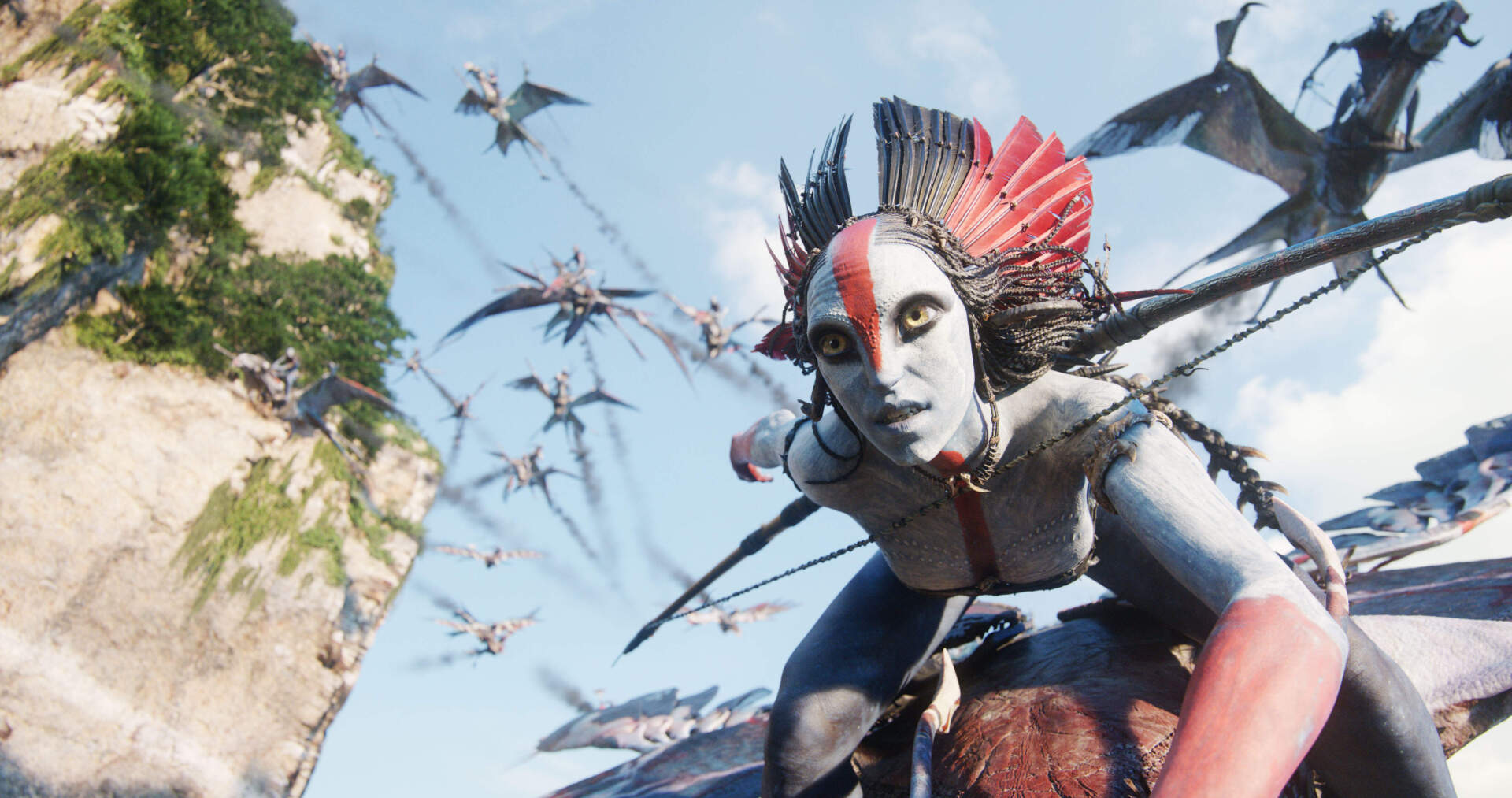
Varang breaks up the “Avatar” universe’s binary between rapacious human invaders and the groovy indigenous flower children of Pandora into something more interesting and adult. (Notably, I believe this is the first time in these movies we’ve seen the color red.) The shifting allegiances add a newfound psychological depth to the one-note character of Quaritch, whose alien body amid the army of human mercenaries is neatly paralleled with his biological son Spider (Jack Champion) being adopted by hero Jake Sully’s big blue family. (Adding to the swirl of interspecies’ cultural appropriation, Spider’s a white kid with blonde dreads.) But really, we’ve never seen anything in these movies like what Chaplin is doing here. For the first half of “Fire and Ash,” I was asking myself, “Do I finally like an ‘Avatar’ movie?” And perhaps more pressingly, “Am I getting turned on by a giant turquoise lady?”
I’m sure the notion tickled Cameron during casting that he’s put the granddaughter of one of film itself’s earliest and most beloved pioneers — yes, she’s from that Chaplin family — into his own groundbreaking attempt to expand the cinematic language. (The actress is also the great-granddaughter of Eugene O’Neill, a legacy Cameron seems less concerned with, given his ear for dialogue.) What I can’t understand for the life of me is why “Fire and Ash” all but abandons Varang halfway through the picture, shifting back to the sad sack Sully family rallying all the wild flora and fauna of Pandora to band together and rise up against Giovanni Ribisi, Edie Falco and a whole host of other puny humans hell-bent on plundering their precious natural resources. The movie flirts with some genuinely interesting ideas about tribalism and identity before backing off to become a retread of the last two pictures. Except this time with more angry whales, whose psychic communications are again subtitled in Cameron’s precious papyrus font.
There’s a terrific new documentary on Disney+ called “Fire and Water: Making the Avatar Films.” It’s a feature-length film that’s been split into two episodes because I guess that’s how people prefer to watch things at home these days. In any case, it’s riveting to observe the lengths Cameron and his crew go to bring such verisimilitude to their universe of pixels. These actors are all really splashing around a giant water tank wearing wetsuits with GoPro cameras in their faces, uploading every last facial flutter and twitch into what will become their onscreen avatars. (See what I did there?) Cameron likes to call the process “digital makeup,” and it’s fascinating to watch the actors summon these scenes entirely out of their imaginations, especially when seen beside the finished product. Co-star Sigourney Weaver compares it to her early days in black box theater productions, and one can be in awe of the effort while also wondering if it’s really worth going to all this trouble in order to accurately render a performance by Sam Worthington.
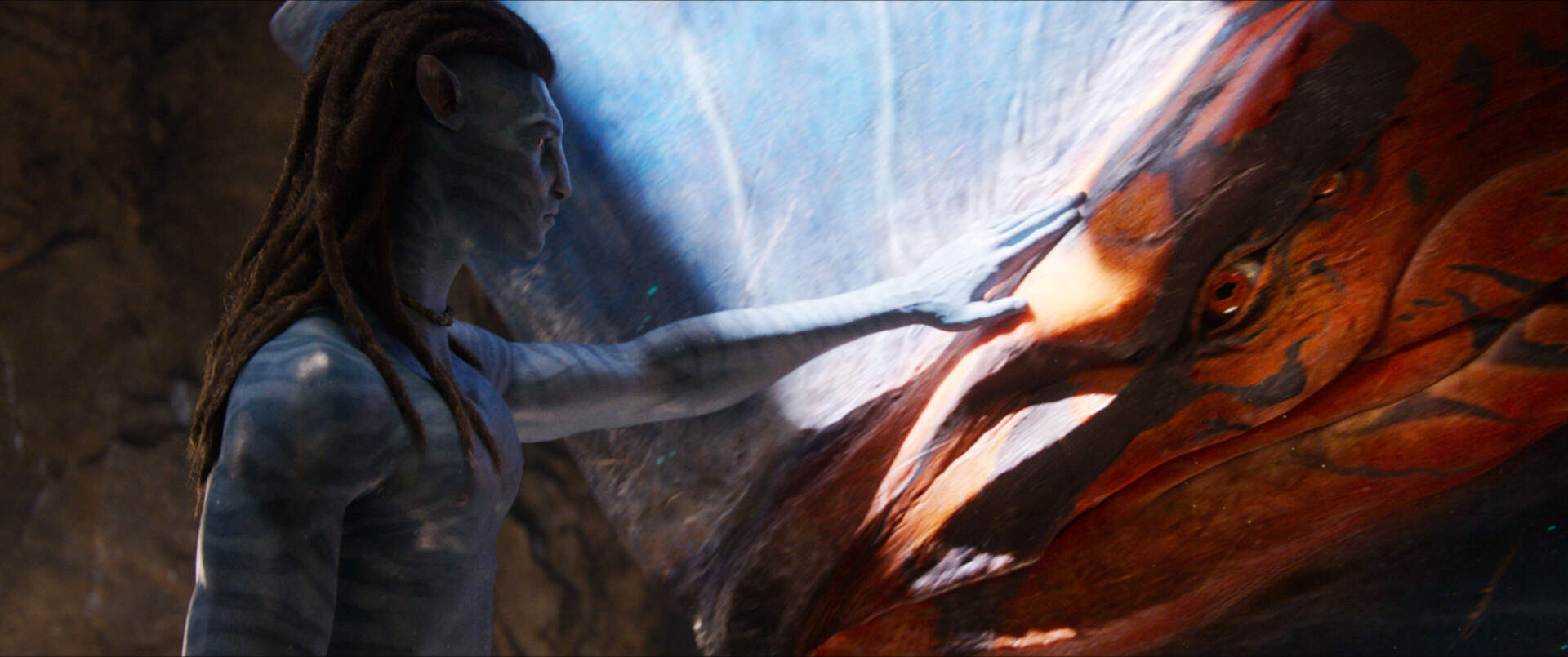
I’ve always been fascinated by how openly Cameron wears his contradictions on his sleeve. His movies are technological marvels, warning us about the dangers of technology. He preaches peace and harmony while choreographing some of the coolest militarized action sequences ever put on film. Cameron’s greatest achievement, “Titanic,” condemned the hubris of building the biggest, most expensive boat that ever sailed by making the biggest, most expensive movie ever made. To the best of my knowledge, he’s the only arrogant Canadian.
At first, “Fire and Ash” feels like it’s going to confront some of these paradoxes head-on, before sheepishly retreating into a reprise of Cameron’s greatest hits. The 14-year-old Na’vi mystic child played by Weaver – don’t ask me to explain or we’ll be here all day – even gets a crowd-pleasing callback to the actress’ famous line from “Aliens.” (The bit was borrowed in last year’s “Alien: Romulus” as well as the recent “Predator: Badlands,” so I guess Cameron has a right to steal it back.) He also retrofits action beats from “Titanic,” “True Lies” and “Terminator 2” into these incandescently artificial landscapes, which in the filmmaker’s preferred high frame rate look a lot like demo display screens for the cheapest expensive TVs at Best Buy.
Yet judging from the first two films’ record-breaking box office numbers, visiting Pandora is a magical experience for audiences all over the world. Just not for me.
“Avatar: Fire and Ash” is now in theaters.