Close Menu
  • Breaking News
  • Business
  • Career
  • Sports
  • Climate
  • Science
    • Tech
  • Culture
  • Health
  • Lifestyle
  • Facebook
  • Instagram
  • TikTok
Categories
  • Breaking News (5,584)
  • Business (328)
  • Career (4,694)
  • Climate (222)
  • Culture (4,684)
  • Education (4,922)
  • Finance (222)
  • Health (889)
  • Lifestyle (4,528)
  • Science (4,612)
  • Sports (349)
  • Tech (185)
  • Uncategorized (1)
Hand Picked

Careers: 3 New Year’s resolutions to boost your career | News

December 14, 2025

Take this week’s American Culture Quiz and test yourself on winter wish lists and tasty trends

December 14, 2025

The News Guard$5.1 Million to support education, housing, economic opportunity, arts and moreFrom classrooms and concert halls to food banks and housing services, 260 Oregon nonprofits, including ones along the central and north….19 hours ago

December 14, 2025

People in the happiest relationships do 7 things on weeknights

December 14, 2025
Facebook X (Twitter) Instagram
  • About us
  • Contact us
  • Disclaimer
  • Privacy Policy
  • Terms and services
Facebook X (Twitter) Instagram
onlyfacts24
  • Breaking News

    People in the happiest relationships do 7 things on weeknights

    December 14, 2025

    Sen. Murphy accuses Trump of ‘dizzying campaign to increase violence’

    December 14, 2025

    Zelenskyy says willing to drop NATO membership bid ahead of peace talks | Russia-Ukraine war News

    December 14, 2025

    Inside Trump’s plans to make U.S. shipbuilding industry great again

    December 14, 2025

    How fears of being labeled 'racist' helped 'provide cover' for the exploding Minnesota fraud scandal

    December 14, 2025
  • Business

    Communicators know business acumen matters. Most don’t feel ready.

    December 12, 2025

    AI investment is a hot topic in the business community and policy authorities these days. As global ..

    November 26, 2025

    Hedy AI Unveils ‘Topic Insights’: Revolutionizing Business Communication with Cross-Session Intelligence

    November 25, 2025

    Revolutionizing Business Communication with Cross-Session Intelligence

    November 25, 2025

    Parking top topic at Idaho Springs business meeting | News

    November 25, 2025
  • Career

    Careers: 3 New Year’s resolutions to boost your career | News

    December 14, 2025

    More Than a Job: Making HVAC a Career Destination

    December 14, 2025

    RTC, EHS partner to host College & Career Tech Day | News, Sports, Jobs

    December 14, 2025

    Angel Reese Announces Career News After WNBA Season

    December 14, 2025

    Fall into a new career at these upcoming events 

    December 14, 2025
  • Sports

    Collective bargaining for college sports becomes hot topic for athletic directors

    December 12, 2025

    Fanatics Launches a Prediction Market—Without the G-Word

    December 5, 2025

    Mark Daigneault, OKC players break silence on Nikola Topic’s cancer diagnosis

    November 20, 2025

    The Sun ChronicleThunder guard Nikola Topic diagnosed with testicular cancer and undergoing chemotherapyOKLAHOMA CITY (AP) — Oklahoma City Thunder guard Nikola Topic has been diagnosed with testicular cancer and is undergoing chemotherapy..3 weeks ago

    November 19, 2025

    Olowalu realignment topic of discussion at Nov. 18 meeting | News, Sports, Jobs

    November 19, 2025
  • Climate

    PA Environment & Energy Articles & NewsClips By Topic

    December 8, 2025

    ‘Environmental Resilience’ topic of Economic Alliance virtual Coffee Chat Dec. 9

    December 7, 2025

    Insights from World Bank Group Country Climate and Development Reports covering 93 economies

    December 3, 2025

    PA Environment & Energy Articles & NewsClips By Topic

    November 24, 2025

    Environmental Risks of Armed Conflict and Climate-Driven Security Risks”

    November 20, 2025
  • Science
    1. Tech
    2. View All

    Beware! 5 topics that you should never discuss with ChatGPT

    December 14, 2025

    Off Topic: Vintage tech can help Gen Z fight digital fatigue

    December 6, 2025

    Snapchat ‘Topic Chats’ Lets Users Publicly Comment on Their Interests

    December 5, 2025

    AI and tech investment ROI

    December 4, 2025

    Giant structure discovered deep beneath Bermuda is unlike anything else on Earth

    December 14, 2025

    This ‘Wet Lava Ball’ in Space Somehow Clings to an Atmosphere

    December 14, 2025

    Blue Origin halfway through 4-flight certification to allow launch of national security missions – Spaceflight Now

    December 14, 2025

    When darkness shines: How dark stars could illuminate the early universe

    December 14, 2025
  • Culture

    Take this week’s American Culture Quiz and test yourself on winter wish lists and tasty trends

    December 14, 2025

    Islandwide Makahiki championship celebrates culture, competition : Kauai Now

    December 14, 2025

    These are the cultural moments that defined 2025

    December 14, 2025

    Sherrone Moore’s firing and its shocking aftermath raises tough questions about the culture of Michigan’s athletic department

    December 14, 2025

    Galveston City Council considers changing island’s downtown parking ‘culture’ | Local News

    December 14, 2025
  • Health

    New resource to help countries count cases of suicide more accurately

    December 14, 2025

    The Herald PalladiumWomen's heart health topic in Niles Feb. 20By Staff NILES – Janel Groth, RN, care manager with Lakeland's "Heart Safe" program, will speak about women's heart health to the Breast….3 days ago

    December 14, 2025

    Abortion

    December 12, 2025

    Off Topic: ICE is creating a public health crisis

    December 10, 2025

    Universal Health Coverage Overview

    December 9, 2025
  • Lifestyle
Contact
onlyfacts24
Home»Science»When darkness shines: How dark stars could illuminate the early universe
Science

When darkness shines: How dark stars could illuminate the early universe

December 14, 2025No Comments
Facebook Twitter Pinterest LinkedIn Tumblr Email
LaL6rioYcomwZL8iZVZ6PH 1600 80.png
Share
Facebook Twitter LinkedIn Pinterest Email

This article was originally published at The Conversation. The publication contributed the article to Space.com’s Expert Voices: Op-Ed & Insights.

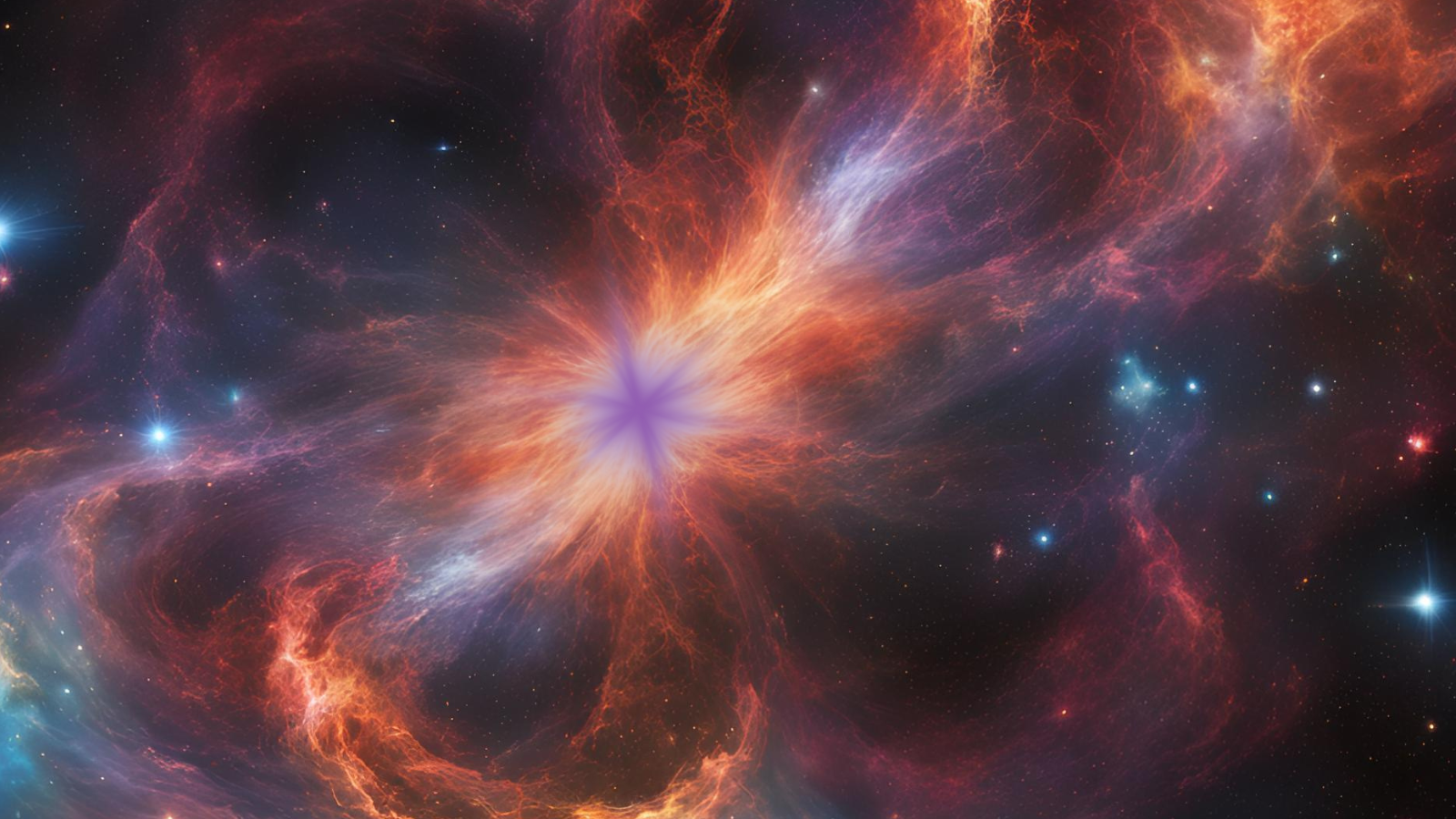
Scientists working with the James Webb Space Telescope discovered three unusual astronomical objects in early 2025, which may be examples of dark stars. The concept of dark stars has existed for some time and could alter scientists’ understanding of how ordinary stars form. However, their name is somewhat misleading.

“Dark stars” is one of those unfortunate names that, on the surface, does not accurately describe the objects it represents. Dark stars are not exactly stars, and they are certainly not dark.


You may like

Still, the name captures the essence of this phenomenon. The “dark” in the name refers not to how bright these objects are, but to the process that makes them shine — driven by a mysterious substance called dark matter. The sheer size of these objects makes it difficult to classify them as stars.

As a physicist, I’ve been fascinated by dark matter, and I’ve been trying to find a way to see its traces using particle accelerators. I’m curious whether dark stars could provide an alternative method to find dark matter.

What makes dark matter dark?

Dark matter, which makes up approximately 27% of the universe but cannot be directly observed, is a key idea behind the phenomenon of dark stars. Astrophysicists have studied this mysterious substance for nearly a century, yet we haven’t seen any direct evidence of it besides its gravitational effects. So, what makes dark matter dark?

Humans primarily observe the universe by detecting electromagnetic waves emitted by or reflected off various objects. For instance, the moon is visible to the naked eye because it reflects sunlight. Atoms on the moon’s surface absorb photons – the particles of light – sent from the sun, causing electrons within atoms to move and send some of that light toward us.

Breaking space news, the latest updates on rocket launches, skywatching events and more!

More advanced telescopes detect electromagnetic waves beyond the visible spectrum, such as ultraviolet, infrared or radio waves. They use the same principle: Electrically charged components of atoms react to these electromagnetic waves. But how can they detect a substance – dark matter – that not only has no electric charge but also has no electrically charged components?

Although scientists don’t know the exact nature of dark matter, many models suggest that it is made up of electrically neutral particles – those without an electric charge. This trait makes it impossible to observe dark matter in the same way that we observe ordinary matter.

Dark matter is thought to be made of particles that are their own antiparticles. Antiparticles are the “mirror” versions of particles. They have the same mass but opposite electric charge and other properties. When a particle encounters its antiparticle, the two annihilate each other in a burst of energy.


You may like

If dark matter particles are their own antiparticles, they would annihilate upon colliding with each other, potentially releasing large amounts of energy. Scientists predict that this process plays a key role in the formation of dark stars, as long as the density of dark matter particles inside these stars is sufficiently high. The dark matter density determines how often dark matter particles encounter, and annihilate, each other. If the dark matter density inside dark stars is high, they would annihilate frequently.

What makes a dark star shine?

The concept of dark stars stems from a fundamental yet unresolved question in astrophysics: How do stars form? In the widely accepted view, clouds of primordial hydrogen and helium — the chemical elements formed in the first minutes after the Big Bang, approximately 13.8 billion years ago — collapsed under gravity. They heated up and initiated nuclear fusion, which formed heavier elements from the hydrogen and helium. This process led to the formation of the first generation of stars.

In the standard view of star formation, dark matter is seen as a passive element that merely exerts a gravitational pull on everything around it, including primordial hydrogen and helium. But what if dark matter had a more active role in the process? That’s exactly the question a group of astrophysicists raised in 2008.

In the dense environment of the early universe, dark matter particles would collide with, and annihilate, each other, releasing energy in the process. This energy could heat the hydrogen and helium gas, preventing it from further collapse and delaying, or even preventing, the typical ignition of nuclear fusion.

The outcome would be a starlike object — but one powered by dark matter heating instead of fusion. Unlike regular stars, these dark stars might live much longer because they would continue to shine as long as they attracted dark matter. This trait would make them distinct from ordinary stars, as their cooler temperature would result in lower emissions of various particles.

An illustration shows a "dark matter bridge" stretching between two colliding galaxies

What could dark matter be made of? (Image credit: HyeongHan et al/Robert Lea)

Can we observe dark stars?

Several unique characteristics help astronomers identify potential dark stars. First, these objects must be very old. As the universe expands, the frequency of light coming from objects far away from Earth decreases, shifting toward the infrared end of the electromagnetic spectrum, meaning it gets “redshifted.” The oldest objects appear the most redshifted to observers.

Since dark stars form from primordial hydrogen and helium, they are expected to contain little to no heavier elements, such as oxygen. They would be very large and cooler on the surface, yet highly luminous because their size — and the surface area emitting light — compensates for their lower surface brightness.

They are also expected to be enormous, with radii of about tens of astronomical units — a cosmic distance measurement equal to the average distance between Earth and the sun. Some supermassive dark stars are theorized to reach masses of roughly 10,000 to 10 million times that of the sun, depending on how much dark matter and hydrogen or helium gas they can accumulate during their growth.

So, have astronomers observed dark stars? Possibly. Data from the James Webb Space Telescope has revealed some very high-redshift objects that seem brighter — and possibly more massive — than what scientists expect of typical early galaxies or stars. These results have led some researchers to propose that dark stars might explain these objects.

An artist's impression of the James Webb Space Telescope flying through space against a star strewn deep blue sky featuring nebula clouds.

The James Webb Space Telescope may have detected some dark stars. (Image credit: NASA, ESA, CSA, Northrop Grumman)

Dark stars may explain early black holes

What happens when a dark star runs out of dark matter? It depends on the size of the dark star. For the lightest dark stars, the depletion of dark matter would mean gravity compresses the remaining hydrogen, igniting nuclear fusion. In this case, the dark star would eventually become an ordinary star, so some stars may have begun as dark stars.

Supermassive dark stars are even more intriguing. At the end of their lifespan, a dead supermassive dark star would collapse directly into a black hole. This black hole could start the formation of a supermassive black hole, like the kind astronomers observe at the centers of galaxies, including our own Milky Way.

Dark stars might also explain how supermassive black holes formed in the early universe. They could shed light on some unique black holes observed by astronomers. For example, a black hole in the galaxy UHZ-1 has a mass approaching 10 million solar masses, and is very old – it formed just 500 million years after the Big Bang. Traditional models struggle to explain how such massive black holes could form so quickly.

The idea of dark stars is not universally accepted. These dark star candidates might still turn out just to be unusual galaxies. Some astrophysicists argue that matter accretion — a process in which massive objects pull in surrounding matter — alone can produce massive stars, and that studies using observations from the James Webb telescope cannot distinguish between massive ordinary stars and less dense, cooler dark stars.

Researchers emphasize that they will need more observational data and theoretical advancements to solve this mystery.

Share. Facebook Twitter Pinterest LinkedIn Tumblr Email

Related Posts

Giant structure discovered deep beneath Bermuda is unlike anything else on Earth

December 14, 2025

This ‘Wet Lava Ball’ in Space Somehow Clings to an Atmosphere

December 14, 2025

Blue Origin halfway through 4-flight certification to allow launch of national security missions – Spaceflight Now

December 14, 2025

SpaceX aims for 550th booster landing amid Saturday night flight – Spaceflight Now

December 14, 2025
Add A Comment
Leave A Reply Cancel Reply

Latest Posts

Careers: 3 New Year’s resolutions to boost your career | News

December 14, 2025

Take this week’s American Culture Quiz and test yourself on winter wish lists and tasty trends

December 14, 2025

The News Guard$5.1 Million to support education, housing, economic opportunity, arts and moreFrom classrooms and concert halls to food banks and housing services, 260 Oregon nonprofits, including ones along the central and north….19 hours ago

December 14, 2025

People in the happiest relationships do 7 things on weeknights

December 14, 2025
News
  • Breaking News (5,584)
  • Business (328)
  • Career (4,694)
  • Climate (222)
  • Culture (4,684)
  • Education (4,922)
  • Finance (222)
  • Health (889)
  • Lifestyle (4,528)
  • Science (4,612)
  • Sports (349)
  • Tech (185)
  • Uncategorized (1)

Subscribe to Updates

Get the latest news from onlyfacts24.

Follow Us
  • Facebook
  • Instagram
  • TikTok

Subscribe to Updates

Get the latest news from ONlyfacts24.

News
  • Breaking News (5,584)
  • Business (328)
  • Career (4,694)
  • Climate (222)
  • Culture (4,684)
  • Education (4,922)
  • Finance (222)
  • Health (889)
  • Lifestyle (4,528)
  • Science (4,612)
  • Sports (349)
  • Tech (185)
  • Uncategorized (1)
Facebook Instagram TikTok
  • About us
  • Contact us
  • Disclaimer
  • Privacy Policy
  • Terms and services
© 2025 Designed by onlyfacts24

Type above and press Enter to search. Press Esc to cancel.