
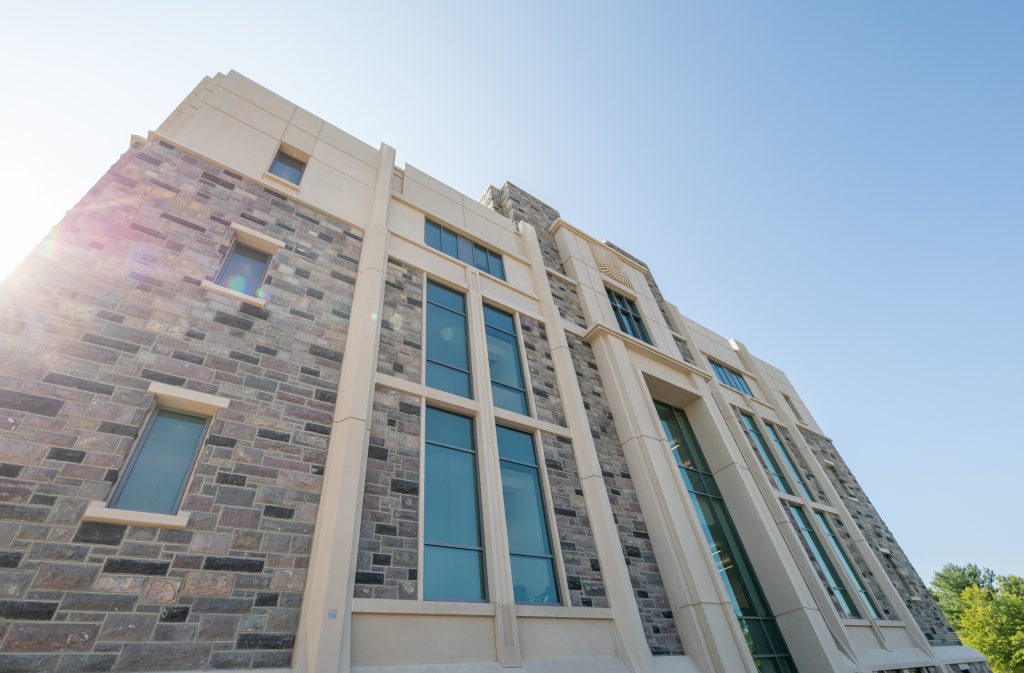
The Undergraduate Science Laboratory Building on Virginia Tech’s Blacksburg campus is now open, marking a significant milestone in the university’s commitment to advancing scientific education and research. This new facility, spanning approximately 102,000 gross-square-feet, is designed to support modern laboratory practices and foster interdisciplinary collaboration among students and faculty from various colleges.
Consistent with the Division of Facilities’ capital construction closeout process, remaining cosmetic finishes will continue for several weeks into the fall semester. In close partnership with the building’s contractor, minor construction activities will occur inside and outside the facility during periods that accommodate teaching and learning schedules. While these efforts are ongoing in bringing the now-open building to its fullest potential – both functionally and aesthetically – students and faculty are requested to only use the building during scheduled classes, labs, and associated activities. When fully completed later this fall, the building will be available and ready for individual study, collaboration sessions, group projects, and other activities that are outside scheduled class/lab timeframes.
The Undergraduate Science Laboratory Building features 26 flexible and adaptable laboratories, including wet, dry, and specialty labs. These modern spaces are equipped to meet the evolving instructional needs of the College of Science, the College of Engineering, the College of Natural Resources and Environment, and the College of Agriculture and Life Sciences. These laboratories will enable students to work on projects that bridge academic instruction with experiential learning and real-world applications.
In addition to advanced laboratories, the facility also includes general-use classrooms, collaboration spaces, offices, informal study areas, and workspaces for graduate teaching assistants. The new building’s completion represents a major milestone in Virginia Tech’s campus master plan, which outlines land use strategies to support the university’s strategic vision.