

The first-of-its-kind center in the Midwest aims to put ‘UW–Madison at the forefront’ of an academic field with growing reach.
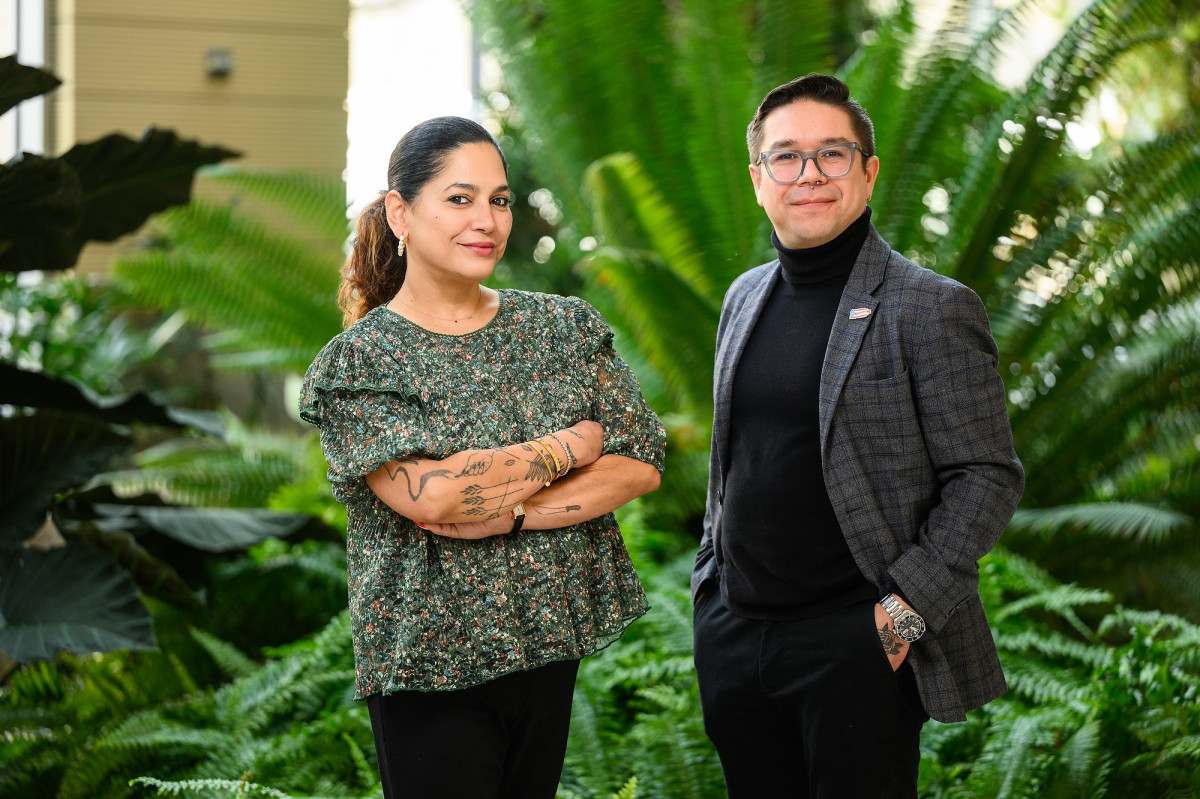
UW–Madison’s new Puerto Rican Studies Hub, which launched in October as the first of its kind in the Midwest, is already becoming a center for outreach and scholarship focused on Puerto Rico’s rich culture and history.
The hub, made possible by a $3 million grant from the Andrew W. Mellon Foundation, kicked off with a musical performance and storytelling by the group Los Pleneros de la Cresta from Ciales, Puerto Rico, in Memorial Union’s Great Hall.
“I was really surprised by the turnout. That event had more than 200 people in attendance,” says Aurora Santiago Ortiz, assistant professor of gender and women’s studies and Chicanx/e & Latinx/e studies, who along with associate history professor Jorell Meléndez-Badillo is spearheading the hub.
“We were just really happy that we were able to build that community space,” says Santiago Ortiz. A lecture by UW–Madison Professor Emeritus Francisco Scarano, a leading historian of Puerto Rico and the Caribbean, followed in late October.
Those inaugural events — from music to scholarship — reflect the academic breadth and community-centered goals of the new hub. More public programming is planned for March 2026, followed by an “Interrogating the Future of Puerto Rican Studies” symposium scheduled for April 23-24 at the Pyle Center on the UW–Madison campus. The symposium title is also the name of an upcoming scholarly anthology co-edited by Santiago Ortiz and Meléndez-Badillo, to be released this spring by Duke University Press.
The hub’s founding is timely, Santiago Ortiz says.
“We see changes in migration patterns, in that there are many Puerto Rican communities outside the major metropolitan centers like Chicago and Milwaukee. There are Puerto Rican communities in other places in Wisconsin, but also in Iowa and Illinois,” she says.
“Why is this important now? Because we want to highlight those communities but also the fact that they are living throughout the Midwest. And as ethnic studies programs are being threatened all over the country, we firmly believe in the field of Puerto Rican studies. At a time when society is very fractured, we want people to come together, to enjoy and learn at the same time.”
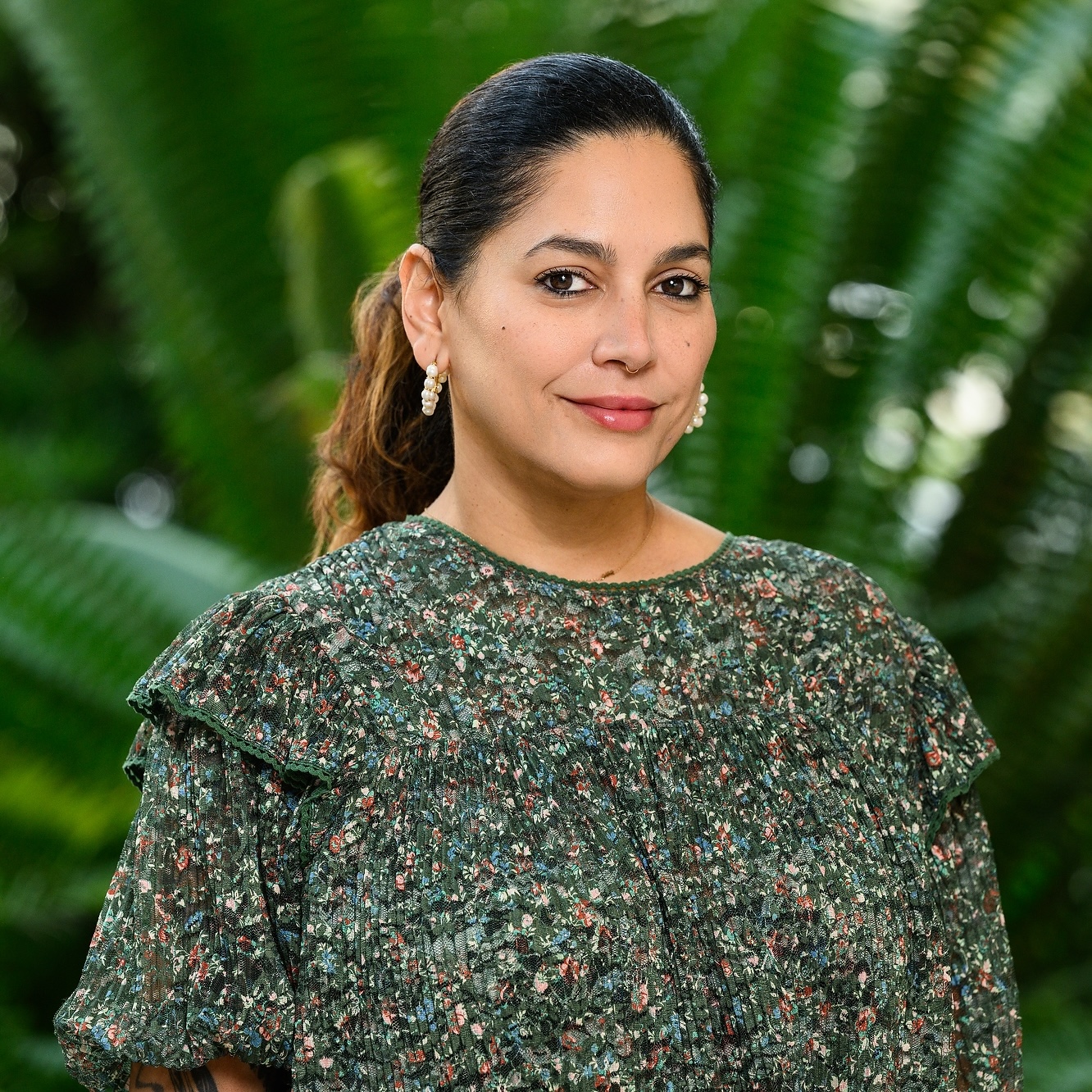
“We firmly believe in the field of Puerto Rican studies. At a time when society is very fractured, we want people to come together, to enjoy and learn at the same time.”
— Professor Aurora Santiago Ortiz
‘We are often invisible’
The field also has broad appeal. In a recent course Meléndez-Badillo taught, a majority of the students were not Puerto Rican history scholars, he says. “But one of the things the course provided for them was a lens to understand broader processes. The history of Puerto Rico is part of Latin American history, of Caribbean history; it’s also U.S. history,” he says.
Meléndez-Badillo’s research stepped into an international spotlight earlier this year through his connection to the music superstar Bad Bunny (Benito Antonio Martínez Ocasio), whose Grammy Award-winning work is steeped in the history and culture of his native Puerto Rico. The rapper’s team reached out to Meléndez-Badillo to write historical narratives to accompany YouTube videos for the 2025 Bad Bunny album “DeBÍ TiRAR MáS FOToS.” Sales of Meléndez-Badillo’s book “Puerto Rico: A National History” soared.
On Feb. 8, Bad Bunny will headline the halftime show at the 2026 Super Bowl, performing on the largest entertainment stage in the world. Will that event have the potential to highlight Puerto Rico even more?
“One thing that happens with Puerto Rico is that we are often invisible, or else hyper-visible, in U.S. media narratives,” Meléndez-Badillo explains. “But often that hyper-visibility comes with the silencing of Puerto Rican voices and our agency. With Bad Bunny that is changing, as he uses the stage to speak on behalf of Puerto Rico as a Puerto Rican person.”
That connection with pop culture “has opened new spaces for me to talk about the history of Puerto Rico and Puerto Rican politics,” Meléndez-Badillo says. “What we really want to do with the hub is to put UW–Madison at the forefront of these conversations, and to make the argument that we can think about these things outside of Puerto Rico, but also outside of New York and traditional centers of Puerto Rican studies.”
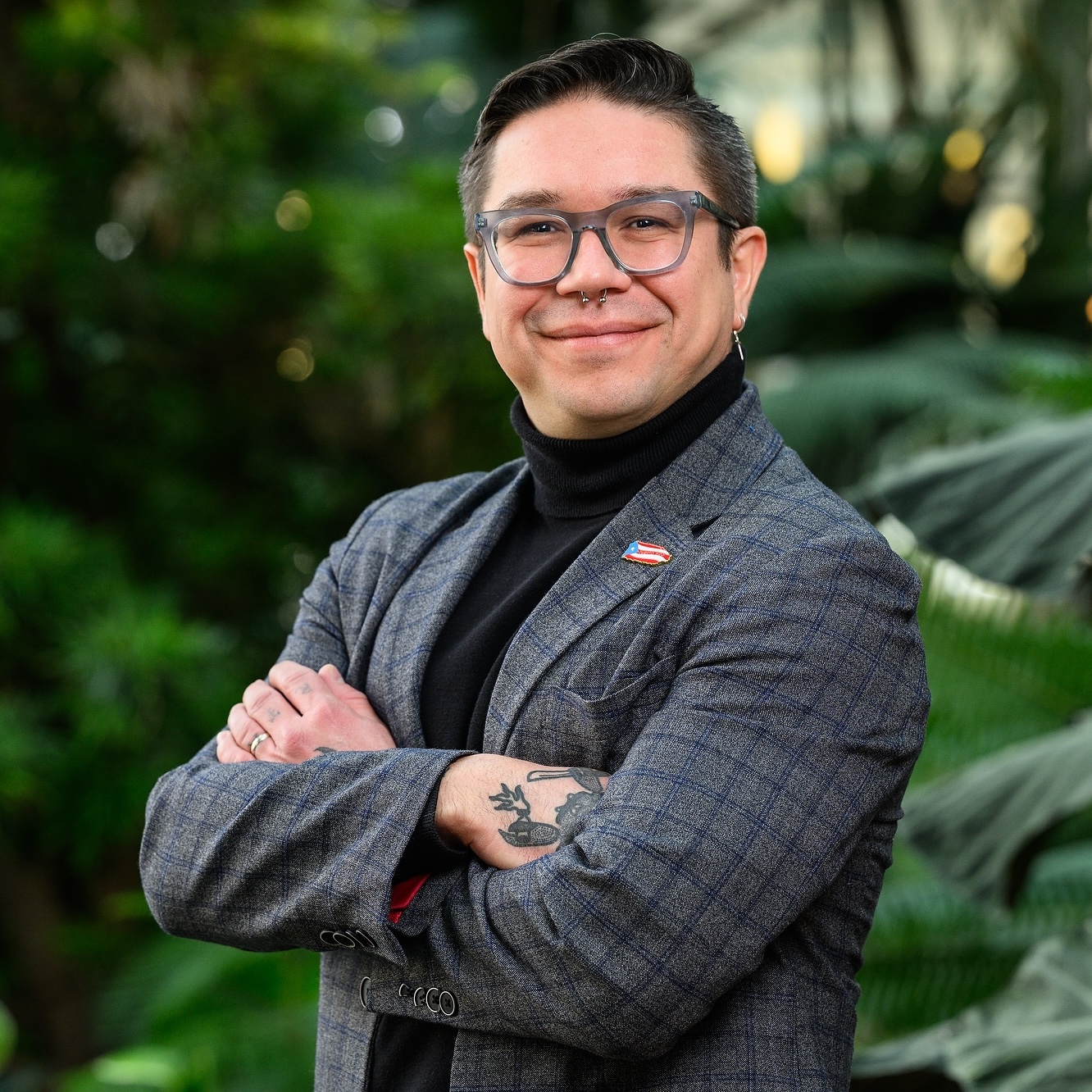
“What we really want to do with the hub is to put UW–Madison at the forefront of these conversations, and to make the argument that we can think about these things outside of Puerto Rico … and traditional centers of Puerto Rican studies.”
— Profesor Jorell Meléndez-Badillo
‘An extension of the Wisconsin Idea’
The Puerto Rican Studies Hub at UW–Madison will fund a pair of postdoctoral fellowships, one focused on Chicanx/e & Latinx/e studies and the other in the field of Spanish and Portuguese. Applications for the two-year postdocs will be accepted through early January.
This spring, the hub will announce El Taller, a new mentorship program for three emerging scholars, and will launch a cohort of six hybrid scholars, one creative writer and one artist. It also plans to grant $10,000 each cycle to five community-based, cultural, scholarly and artistic initiatives connected to Puerto Rico and its diasporas, in a program designed to strengthen partnerships beyond the university.
“In this first year, we are just building the hub,” Santiago Ortiz says, noting that eventually the organizers hope to find some physical space on campus for students to gather.
Beyond the local impact, “one of the things we are really adamant about is that we want to be a place for connecting folks, not only in the Midwest, but nationally and internationally,” Meléndez-Badillo says. “Aurora and I have been working on expanding the field of Puerto Rican studies for many years now. In 2018 we founded the Puerto Rican section within the Latin American Studies Association, the largest Latin American studies association in the world. And ever since, we’ve worked tirelessly to expand the field.”
“There is a tradition of Puerto Rican studies here at UW–Madison that we want to continue and honor,” says Meléndez-Badillo, who along with Santiago Ortiz came to the university in 2022.
“Thirty years ago, students and faculty demanded these Puerto Rican studies programs. So we’re tapping into that broader history,” he says. “And we’re also seeing an extension of the Wisconsin Idea, which is accumulating knowledge in service of the broader community outside of the university.”
To contact the Puerto Rican Studies Hub, email prstudies.hub@wisc.edu, or sign up for the hub’s newsletter at linktr.ee/prstudies.hub.