

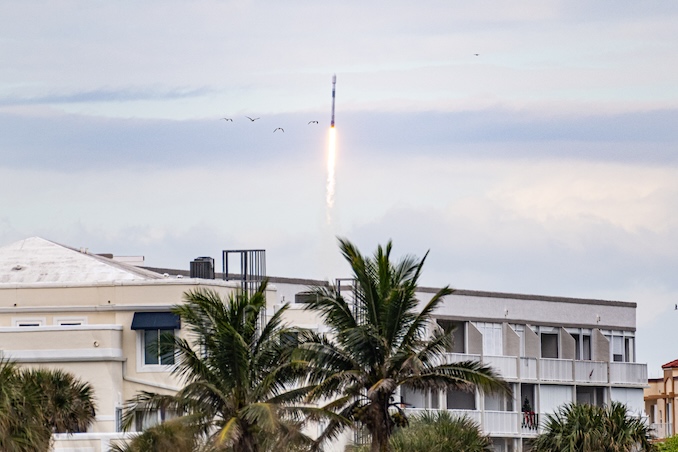
Update Dec. 9, 6 p.m. EST (2300 UTC): The National Reconnaissance Office confirms a successful deployment.
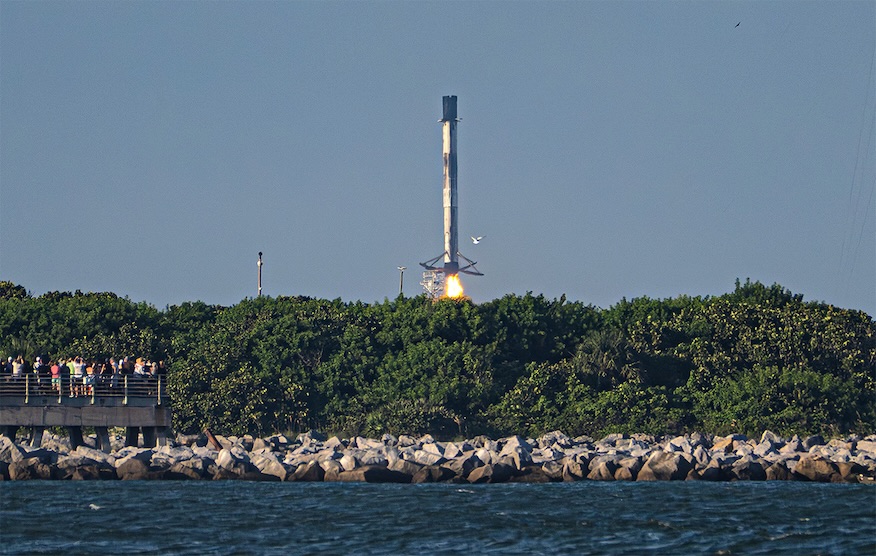
SpaceX launched its final national security payload of the year for the nation’s secretive spy satellite agency, the National Reconnaissance Office. The Tuesday afternoon flight was also the final Falcon 9 booster recovery at Landing Zone 2 at Cape Canaveral Space Force Station.
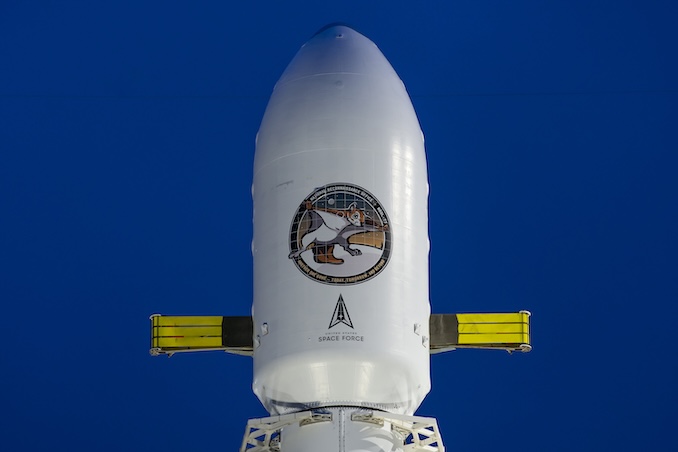
The mission, dubbed National Reconnaissance Office Launch 77 (NROL-77), includes at least one payload, which the intelligence-gathering agency only described as being “designed, built, and operated by NRO.”
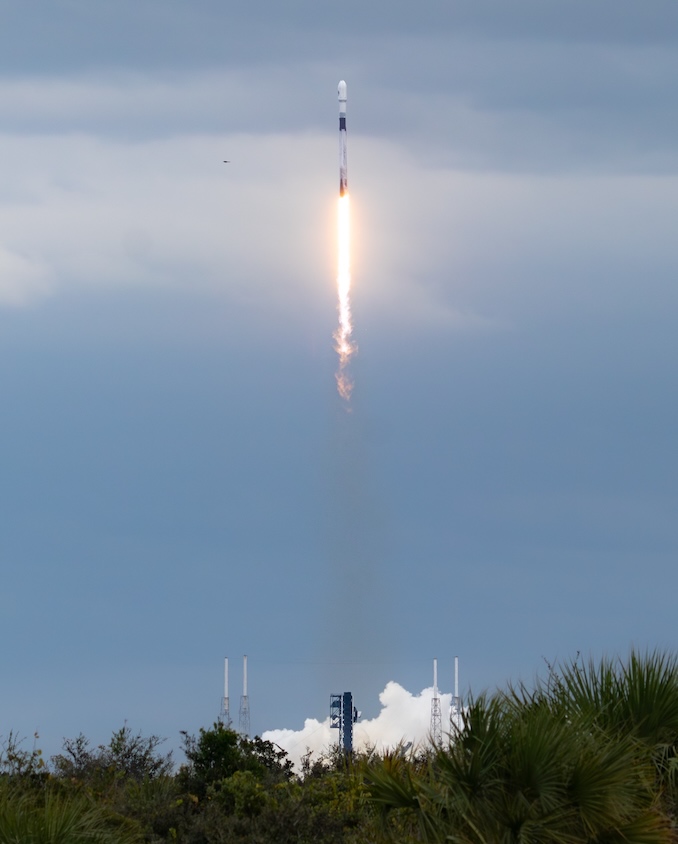
Liftoff of the Falcon 9 rocket from Space Launch Complex 40 (SLC-40) happened at 2:16 p.m. EST (1916 UTC). The launch followed a north-easterly trajectory upon leaving Florida’s Space Coast.
SpaceX used Falcon 9 first stage booster B1096. This was its fourth launch after previously flying NASA’s IMAP, Amazon’s Kuiper Falcon 01 and Starlink 6-87.
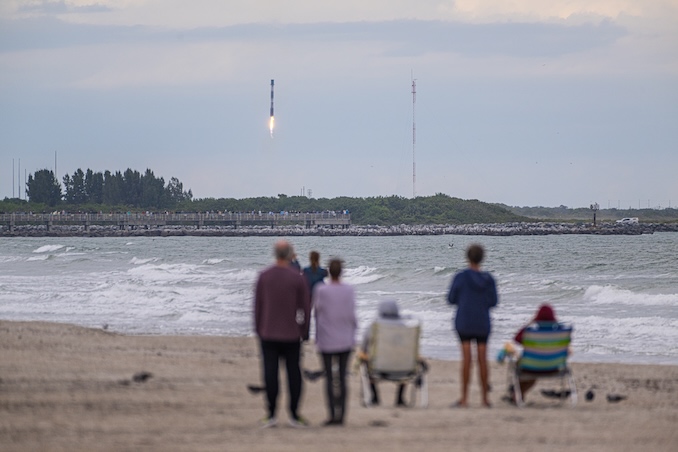
Nearly eight and a half minutes after liftoff, B1096 returned to the Florida Peninsula with a touchdown at Landing Zone 2 (LZ-2). This was the 16th touchdown at LZ-2 and the 547th booster landing to date for SpaceX.
Executing a contract
The NROL-77 mission is the second NRO mission launched by SpaceX as part of the National Security Space Launch (NSSL) Phase 2 contract awarded in August 2020. The contract was broken up to assign missions between SpaceX and United Launch Alliance (ULA) over five order years for specific missions.
This is the first mission that comes from Order Year 5 that was announced on Oct. 31, 2023. It was one of ten missions assigned to SpaceX that year, which has a combined value of $1.236 billion.
The NSSL Phase 2 contract is an acquisition partnership managed by the U.S. Space Force’s Space Systems Command’s Assured Access to Space.
“The partnership between NRO and SSC continues to strengthen our nation’s space superiority through innovative launch solutions and shared expertise,” said Col. Kathryn Cantu, director, NRO Office of Space Launch, and NROL-77 mission director. “As space becomes increasingly contested, this partnership enables us to rapidly deploy advanced intelligence capabilities while maintaining the agility and resilience needed to address emerging threats. Our collaborative approach ensures America’s continued leadership in space-based national security operations well into the future.”
Some missions though, like the NROL-146 mission and other flights supporting the NRO’s so-called proliferated architecture satellite constellation, are funded through other avenues that are part of the agency’s classified budget.
“When considering our launch cadence and need for tailorable mission assurance, the NRO recognized that we needed a bridge between Phase 2 to Phase 3 – Lane 1,” an NRO spokesperson said in a statement to Spaceflight Now back in May 2024. “This resulted in some missions being procured outside of NSSL.”
The NROL-174 mission, which launched on a Northrop Grumman Minotaur 4 rocket on April 16, was procured through the Rocket Systems Launch Program, which handles smaller launch capabilities.
“A collaborative team of dedicated experts from System Delta 80, NRO, and SpaceX validated the flight hardware and integration essentials that assured successful delivery of the mission,” said Col. Ryan M. Hiserote, System Delta 80 commander and NSSL program manager. “And kudos to our SSC SLD-45 teammates who operated the range systems and infrastructure as part of this launch. NROL-77 was our last NSSL mission this calendar year. Together, we look forward to another busy year in 2026.”
Among the ten NRO missions launched in 2025, nine of them flew on Falcon 9 rockets:
- Jan. 09 – NROL-153
- Jan. 14 – Transporter-12 (rideshare payload)
- Mar. 14 – Transporter-13 (rideshare payload)
- Mar. 20 – NROL-57
- Mar. 24 – NROL-69
- Apr. 12 – NROL-192
- Apr. 16 – NROL-174 (launched on Minotaur 4 rocket)
- Apr. 20 – NROL-145
- Sep. 22 – NROL-48
- Dec. 09 – NROL-77
End of an era
The planned landing of B1096 at LZ-2 may very well wrap up SpaceX’s time using this site as a landing location for its Falcon boosters.
In an effort to increase access to launch providers at Cape Canaveral Space Force Station, Space Launch Delta 45 decided all launch providers need to return their rocket boosters to landing sites at their launch pads.
SpaceX has been taking the necessary steps to shift its recovery infrastructure away from LZ-1 and LZ-2. The company’s lease for these sites ends on Dec. 31, 2025.
SpaceX received the environmental approvals needed to move forward with a landing pad near (SLC-40) and has been making constructing that facility over the course of 2025.
The company is also looking to add a landing pad at Launch Complex 39A at NASA’s Kennedy Space Center. SpaceX needs two landing zones in order to recover the side boosters of a Falcon Heavy rocket.