

That came as a surprise, since woolly rhinos disappear from the fossil record about 400 years later. Already, the species was making its last stand in northeastern Siberia; its range had been shrinking eastward since around 35,000 years ago. But apparently, on the cusp of extinction, the species was still doing pretty well in northeastern Siberia (except for this particular rhino, who got eaten by a wolf after what one can only assume was a bad day).
Guðjónsdóttir et al. 2026
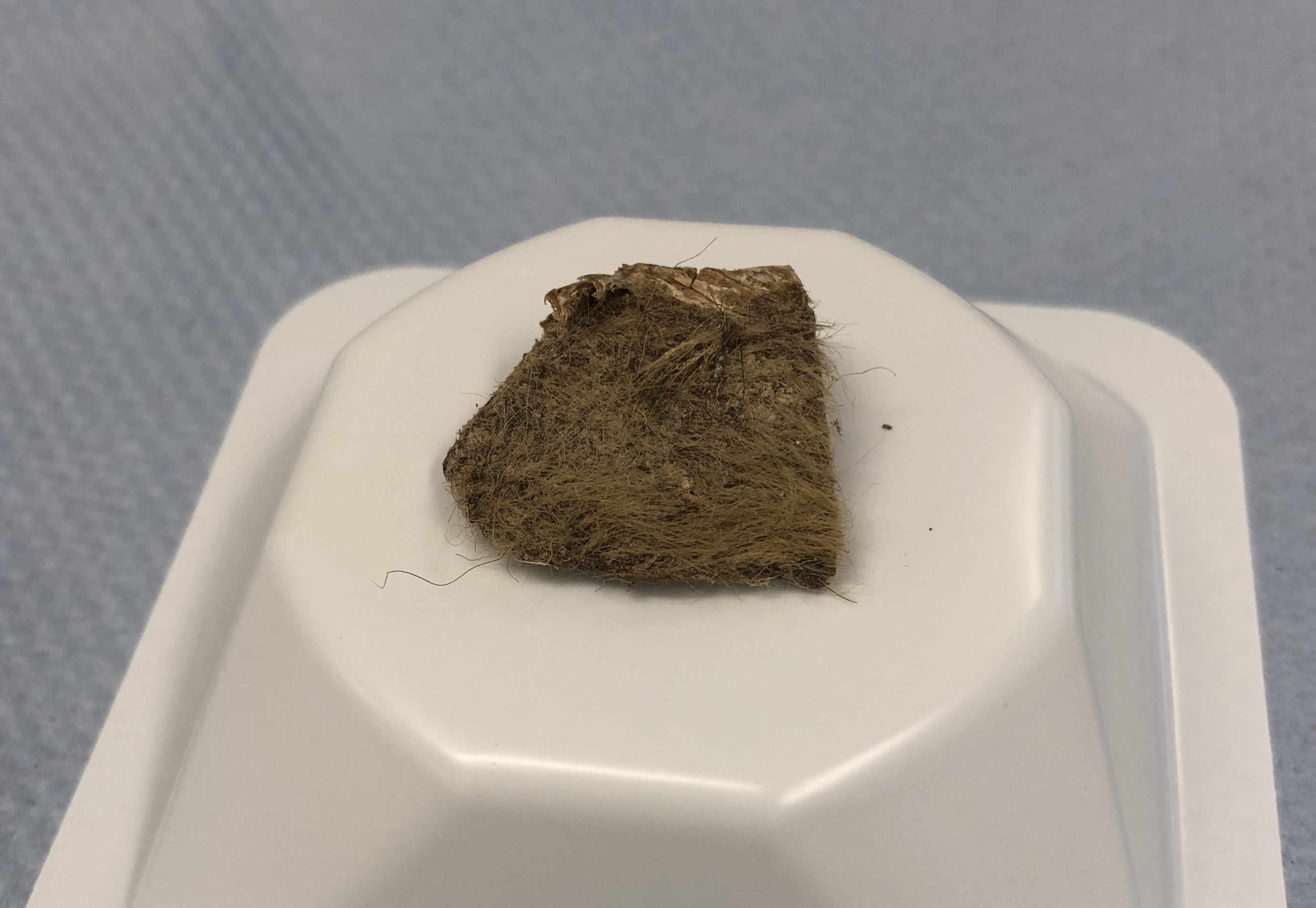
This is the piece of woolly rhino meat in question, extracted from the stomach of a wolf puppy who lived near the end of the last Ice Age.
Guðjónsdóttir et al. 2026
Guðjónsdóttir et al. 2026
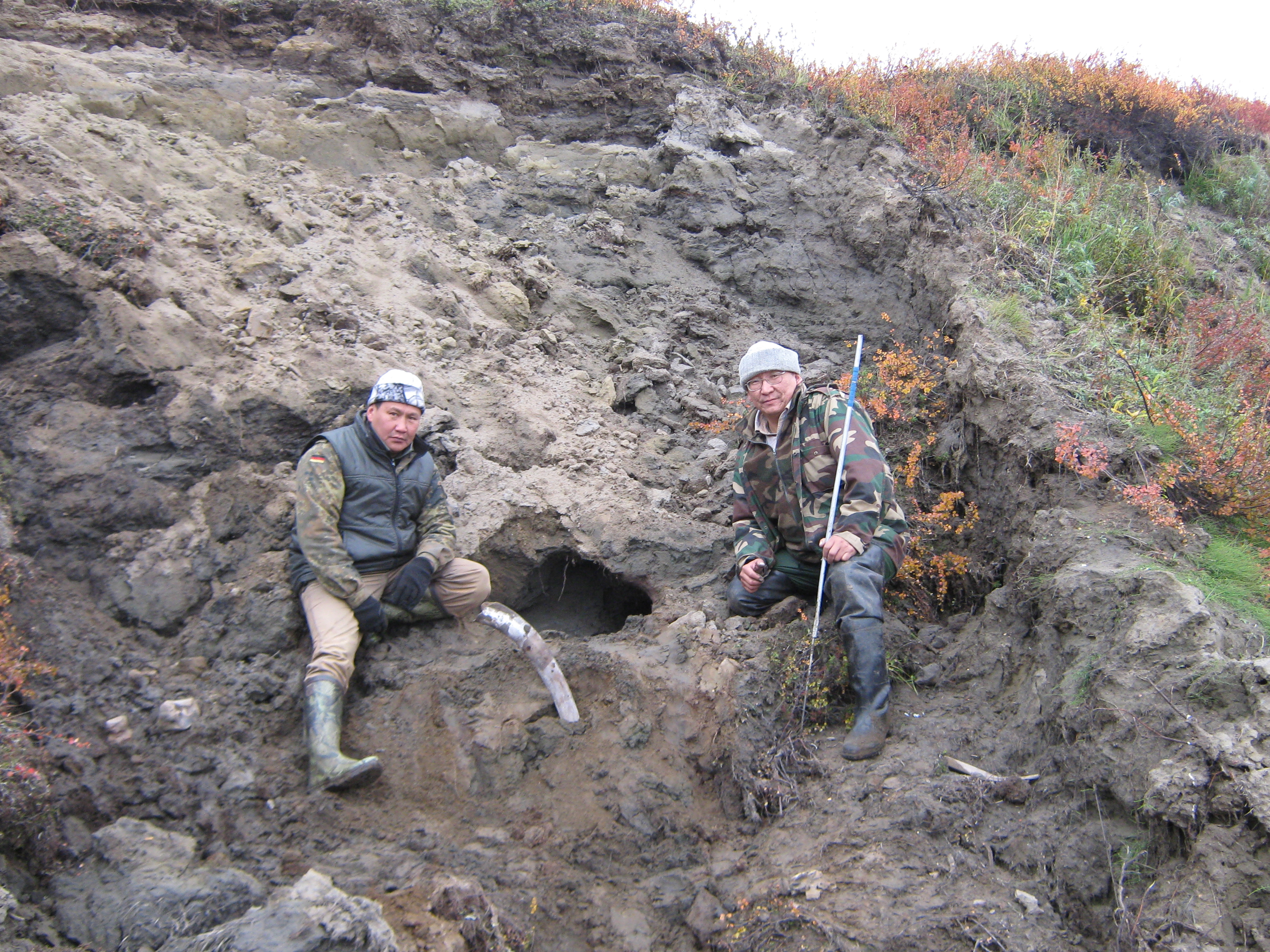
Two researchers pose next to the spot where the Tumat wolf puppy and her sister were found in the Siberian permafrost.
Guðjónsdóttir et al. 2026

Guðjónsdóttir et al. 2026
Woolly rhino horn, with study co-author Love Dalén for scale.
Guðjónsdóttir et al. 2026
Two researchers pose next to the spot where the Tumat wolf puppy and her sister were found in the Siberian permafrost.
Guðjónsdóttir et al. 2026
Woolly rhino horn, with study co-author Love Dalén for scale.
Guðjónsdóttir et al. 2026
Woolly rhino population was small but healthy
So what counts as a stable population?
In the genome of a 49,000-year-old woolly rhino from a few hundred miles east in Rakvachan, Siberia, Guðjónsdóttir and her colleagues found clues about the species’ even more ancient history. Big changes in population size, among other events, can leave traces in the genome, and the researchers used those to estimate that between 114,000 and 63,000 years ago, the woolly rhino population dropped sharply, from about 15,600 to about 1,600.
Those numbers refer to what ecologists call the “effective population,” which means the number of rhinos breeding and contributing to the group’s gene pool (so there would have been more than 1,600 running around, but not all of them were reproducing). After 63,000 years ago, the woolly rhino population seems to have leveled out.
According to ecologists, an effective population of 1,600 rhinos would have been more than enough to keep the species thriving. Smaller populations, especially with shrinking ranges, are more vulnerable to being wiped out by events like environmental change, natural disasters, or disease outbreaks. And small populations are also more likely to face the genetic consequences of inbreeding, a loss of genetic diversity, and genetic drift (in which potentially harmful mutations can pile up), leaving the species even more vulnerable. The whole thing can turn into a vicious cycle.
For most species, the threshold for avoiding those genetic pitfalls is an effective population of around 1,000.
The end came suddenly for woolly rhinos
Researchers had expected to find woolly rhinos in dire straits by 14,400 years ago. Prior to discovering the Tumat genome inside a wolf’s stomach, the most recently sequenced woolly rhino genome dated to 18,400 years ago (and it was found just a few miles from the Rakvachan rhino). That genome showed all the signs of a healthy, stable population. But by 14,000 years ago, woolly rhinos disappeared from the fossil record—so it looked like their population must have started its death spiral shortly after 18,400 years ago.