

At Great Falls College MSU, the sound of wood being cut filled the room as high school students participated in a session that was far from a conventional classroom experience—traditional Indigenous paddle carving.
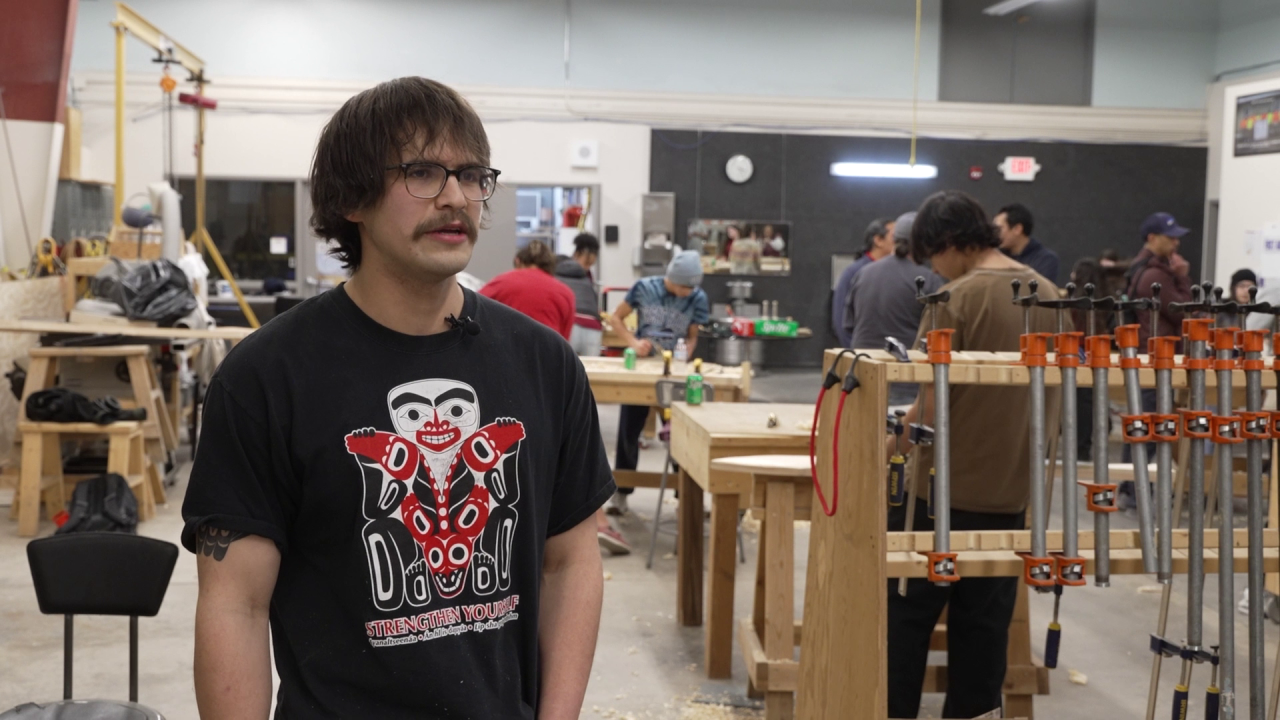
The children are working with carving apprentice Brandon Gomez, whose roots are in the Tlingit Tribe of Southeast Alaska, to make five-foot Tlingit-style paddles.
Quentin Shores reports – watch the video here:
Indigenous paddle carving brings culture and craft to Great Falls students
“So they’re carving five-foot, traditional Tlingit-style paddles,” Gomez told me. “This is my mentor Wayne Price’s style of paddles that he’s formed over the years.”
While the paddles came from coastal Alaska, their presence in Great Falls is the result of a collaboration that began hundreds of miles away.
Dugan Coburn, the Director of Indigenous Education for Great Falls Public Schools, encountered Gomez during an Indigenous education conference in Juneau, Alaska. That meeting sparked the development of a concept.

MTN News
“We were able to bring him up and arrange for this and catch him in between his college classes,” Coburn told me. “He brought four bags, and three of them were just tools for us to use.”
Coburn says the project symbolizes the diversity within Great Falls schools, which serve children from dozens of different backgrounds.
“We have 71 different tribes in our school district, and some of them are from Alaska,” he told me. “So this would be a good project to bring down. Also, for us, it helps us bring in culture for our teachers to be able to bring into their classrooms.”
Gomez started the program by teaching middle school kids how to use band saws securely, how to smooth the wood, and, most importantly, the cultural significance of the paddles.
“They didn’t have cars, but they did have dugout canoes,” Gomez added. “So these paddles have been used forever for getting people around and transporting families, clans, villages.”
MTN News
Today, paddles are frequently used for ceremonial purposes. They are used in dances, given as gifts, and signify the identity of the family that owns them, much like a family crest.
For Coburn, the experience extends beyond artistry. It is about representation, comprehension, and opportunity.
“Not having a lot of experience with the Tlingit tribe and the people from Alaska, this is a great way for us to bring them back and bring them into our community,” he told me. “So our kids will learn about that.”
Coburn says that paddle carving is only one of the numerous skills taught in Indigenous education courses, which provide students with alternate career routes and hands-on learning opportunities after graduation.