

Benjamin Franklin was in his 50s, decades beyond his own formal education, when he put quill to paper and delivered to us the words that have come to best define the modern idea of education. “If a man empties his purse into his head, no man can take it from him,” Franklin inked in 1758, adding, “An investment in knowledge pays the best interest.” This idea, the notion that education, that seemingly ephemeral thing, is not only unerodable and impervious to pilfering, but is also an investment, has for decades, centuries, even, defined how learning is regarded in the Western world. Essentially, you get out of education what you put in.
But there’s always been something unspoken in Franklin’s otherwise unimpeachable maxim, an idea unfulfilled, like a kite and metal key aloft in the storm yet to touch lightning. And it is this: No one can reap the promises of education if they can’t get an education in the first place. And since long before Franklin’s time, access to education has been limited to the very few. That’s where the 10 women and men on this list come in. Each holds a smaller part of a bigger idea: make college accessible to as many people as possible — and, once those people get to college, make what they learn there effective enough to change their lives and the lives of their families.
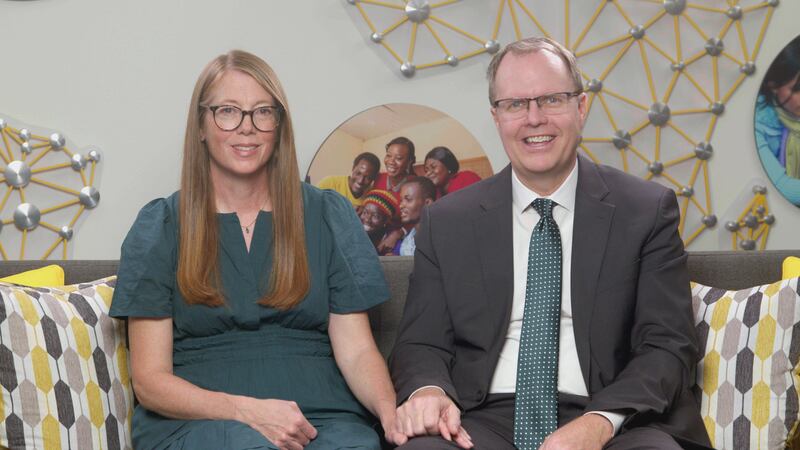
Brian Ashton: A World of Knowledge
The students come from all over. Brazil and Mexico. Nigeria and the Philippines. But the enrollee Brian Ashton is thinking of right now came from Uganda. She enrolled in BYU-Pathway Worldwide — the global online education program Ashton has helmed since 2021 — after she escaped an abusive marriage with her four daughters. And she exemplifies the goal of Pathway, overall. “Intelligence or the ability to learn is equally distributed throughout the world, but opportunity is not,” Ashton says. “And what we want to do is to make opportunities equally distributed.” Among Pathway’s 65,000 enrollees, more than 60 percent come from outside the U.S., the majority first-generation college students from low-income backgrounds.
After a foundational yearlong Pathway Connect program, students begin earning job-ready certificates while working toward a bachelor’s degree in areas of technology, communications, health or human services. Accredited through BYU-Idaho and Ensign College, Pathway offers three-year bachelor’s degrees online. Tuition is adjusted based on financial circumstances in the student’s country. This means that U.S. students can earn a degree for as low as nearly $7,000, with scholarships available, and for international students the cost is even lower. Alongside academics, the program focuses on integrating students’ faith with learning. “Religious principles are baked into every single course,” Ashton says.
And that mother from Uganda? After completing her Pathway coursework, she’s thriving at a venture capital firm. — Mariya Manzhos
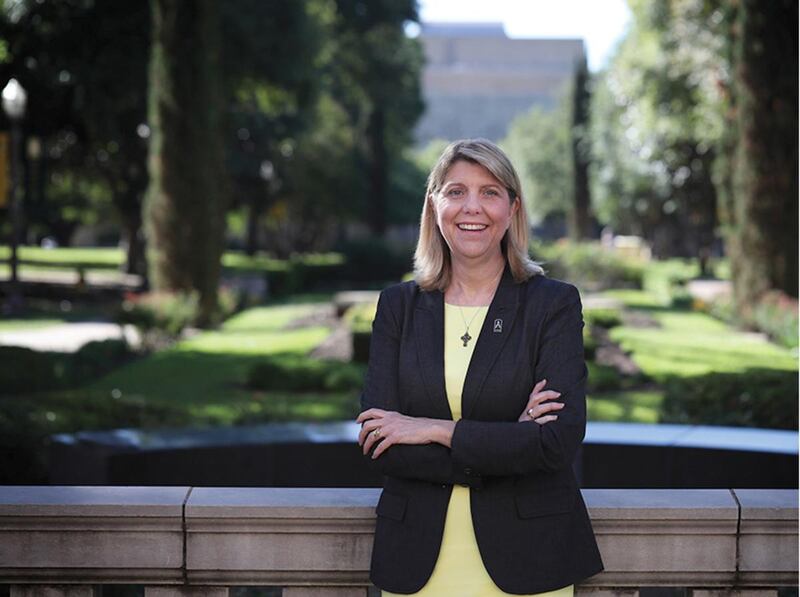
Linda Livingstone: Faith and science
When Linda Livingstone was inaugurated as Baylor’s 15th president in 2017, she declared, “The world needs Baylor.” What she meant, she told Deseret Magazine, is that the world “needs a Christian research university that is taking seriously the preparation of students to become leaders.”
The world, in turn, is recognizing Baylor for what it’s doing. In 2022, Baylor earned “Research 1″ status, placing it shoulder-to-shoulder among the world’s upper echelon of research universities. Achieving “R1″ status has long been Livingstone’s goal — but she did so without sacrificing the university’s faith-based mission.
Shortly after taking office, Livingstone introduced “Illuminate,” the university’s comprehensive strategic plan to transform into a world-class research institution. The first of the plan’s four pillars is creating an “unambiguously Christian educational environment.”
That Christian-informed education structure is appealing to many young people, Livingstone says, allowing the school to attract top students who crave an environment that encourages them to live their faith. “The best students in the country really want to have opportunities to do research while they’re in college,” she explained. “We have the ability to do that, while also giving them the opportunity to strengthen and grow their faith.”
Livingstone sees that mission in global terms. The university’s longtime motto — Pro Ecclesia, Pro Texana — outlines the mission: “For Church, For Texas.” But in May 2024, the school’s board approved an addition to it: Pro Mundo, or “For the World.” —Samuel Benson
Mildred García: Representing the underrepresented
Mildred García began her speech with a parallel. In March, she introduced herself to the California Senate Budget and Fiscal Review Subcommittee as chancellor of the state’s university system. “The (California State University) story mirrors my own,” she told the panel of state senators. “I see myself in the students we serve.” A first-generation college student who began her academic career with an associate degree from New York City Community College, Garcia took the helm of the nation’s largest university system, the first Latina chancellor in its history, in October 2023.
About one-third of those enrolled in the California State University system are first-generation college students and nearly half are underrepresented minorities, making it the most diverse four-year university network — a grid of more than 20 campuses strewn throughout the Golden State, with almost half a million in attendance. Some 40 percent of its undergraduate students transfer from state community colleges.
Garcia’s latest aim is to strengthen programs that lead to more successful transfers for students from state community colleges to state universities. One such program would make some university courses accessible at community colleges to grant students more exposure to the difference in study. “Taking classes at a community college or high school with a CSU faculty member opens up possibilities and gives you confidence,” she told the Public Policy Institute of California in December. “This is the lifeblood of our system.” — Natalia Galicza
Ted Mitchell: Rise of the differentiated university
Today’s American colleges and universities are aspiring to an ideal of what they think a college or university should be, says Ted Mitchell, instead of embracing their unique strengths. “Not taking anything away from research universities,” he explains, “(but) it’s not clear that everybody should try to be one.” Instead, he promotes the idea that schools should lean into more specialized missions and pursue them vigorously. As president of the American Council on Education, one of his major initiatives has been developing a new tool that makes it easier for these schools to compare themselves to each other, instead of some vague archetype.
For too long, Mitchell says, higher education classifications have been much too broad to reflect the country’s unique, dynamic landscape. In February 2022, his organization partnered with the Carnegie Classification of Institutions of Higher Education — a long-running classification system — to perform a much-needed update. “(We) created a way of grouping institutions that’s very different than anything in the past,” he says. The update, to be released next year, will better allow users to compare institutions based on multiple specific factors, like urban/rural/suburban settings or research/liberal arts focuses, instead of catch-all classifications like “doctoral universities” or “special-focus institutions.” Such a tool lets prospective students sort by characteristics of importance to them; lets institutions better identify their most similar peers; and lets both parties compare similar schools in terms of socioeconomic mobility ratings, which will also be included in the new classifications.
Categorizing universities based on what they do well, and encouraging them to lean in deeper, would be a healthy development in a nation of substantial regional and ideological diversity. “It’s very important for universities to be diverse themselves, and to represent different ways of thinking,” Mitchell says. “There are different environments that are going to be useful to different students, that will serve their communities in different ways.” — Ethan Bauer
Elise Awwad: Future-proofing skill sets
Elise Awwad looked out at an auditorium full of graduates with equal parts pride and nerves. She’d attended commencement ceremonies and spoken to students plenty of times in her career, which began as an admissions adviser two decades earlier. But in June, she spoke to the DeVry University class of 2024 for the first time as its first woman CEO and president.
“Throughout your time at DeVry University,” Awwad told the crowd in Rosemont, Illinois, “you have been at the forefront of innovation, interacting with emerging technologies and learning to problem-solve in a world whose only constant is change.” That commitment to innovation is part of what defines DeVry. It’s also what has defined her own trajectory.
In the early 2000s, when the internet was still in its infancy and virtual school was far from a mainstream option, Awwad, a university adviser, guided students interested in online learning. In her first term as president, she’s doubled down on shepherding accessibility and “future-proofing” students. Under Awwad’s leadership, DeVry has introduced four new scholarship programs, frozen the cost of tuition for its fourth consecutive year and revamped more than 60 percent of its courses to reflect current workforce trends. She also plans to expand course offerings focused on artificial intelligence so graduates can remain competitive as the employment landscape shifts across industries. “It’s not just about looking at what’s in front of you,” she says. “It’s about trying to look far beyond that and being ready for that. Because the world doesn’t wait for you to change.”
It’s the future Awwad thinks about the more she works with students. It’s what she thought of as she congratulated graduates in June — with all their smiles, their academic caps and tassels. “I got up there and I looked out at all of our students, and I thought to myself, this is why I did what I do,” she says. “This is why I spent 20 years here.” — Natalia Galicza

Michael Crow: Education as service
Since becoming president of Arizona State University in 2002, Michael Crow has established himself as one of the most innovative leaders in American higher education. Among his most ambitious projects was the 2014 establishment of an official charter — a document meant to define the school’s role and mission as the “New American University.” The charter focuses on student success, but also on the university’s responsibility to something bigger. ASU, according to the charter, assumes “fundamental responsibility for the economic, social, cultural and overall health of the communities it serves,” and will prioritize “research and discovery of public value.”
At a time when an overwhelming majority of Americans believe higher education is heading in the wrong direction, Crow’s insistence on serving local and national needs could help bolster support for universities in general. “We can make our universities produce master learners more dedicated to the breadth of our society, more dedicated to the betterment of our society, more dedicated to the betterment of our democracy,” he has said. “If we can do that, we will have had a major impact on the outcome of humanity.” — Ethan Bauer
Eric Hoover: The students’ watchdog
Every week, a college-aged Eric Hoover pored over the latest edition of The Chronicle of Higher Education. At 20, Hoover wasn’t the publication’s typical audience; most readers, professors and other professionals within or adjacent to academia skew much older. But as editor of the University of Virginia’s student newspaper, he had a free print subscription, and the Chronicle’s pages proved rife with inspiration for a burgeoning journalist, pushing him to think outside the bounds of his own school and experience.
He was particularly drawn to stories about students’ grievances and concerns, from demands for representation of minority groups on campus to coverage that fell outside the elite institutions so obsessed over by mainstream news outlets. When he joined the Chronicle staff years later, Hoover pursued that same mission of writing with the average student in mind. “Low-income students, underrepresented minority students, undocumented students, first generation students, students who just don’t have much, if any, money,” he says. “I reoriented my beat to focus on the lived experience of students like that.”
Since 2001, he’s covered financial aid, college admissions, student judicial issues and student culture, a beat he calls “getting to and through college.”
“The conversation needs to be broader than just access to college,” he says. “Getting in — as hard as it can be for many disadvantaged students, whatever their age, to get in, to be admitted, to enroll — that’s, for many students, just the beginning of challenges.” — Natalia Galicza
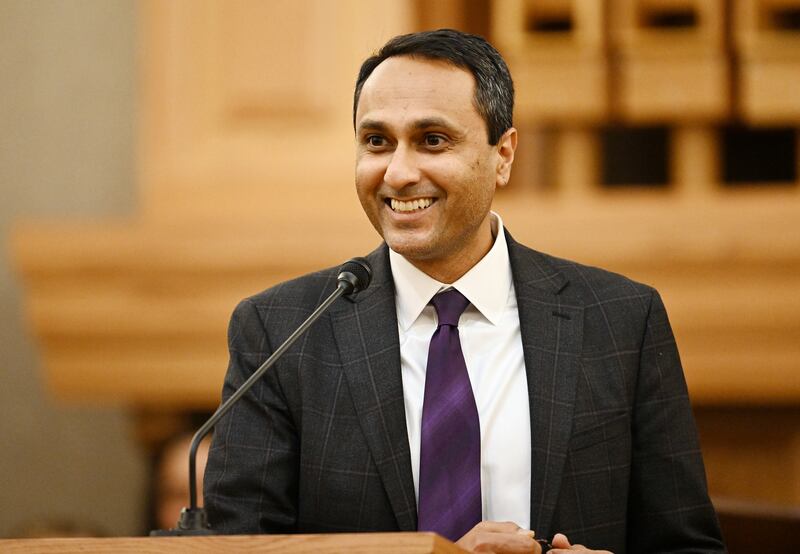
Eboo Patel: Strength in differences
One of Eboo Patel’s mentors often said that “diversity is a fact.” That mentor was speaking about the country generally, but more specifically about college campuses, where most students encounter people of diverse races, ethnicities, religions and languages for the first time. Navigating those situations, therefore, is not optional. It’s something that every campus must confront. “The question is,” Patel says, “are they going to be in conflict, or are they going to be in cooperation?”
Patel’s approach to fostering this cooperation is pluralism, which he defines as “an ethos that is about respect for diverse identities, relationships between different communities and cooperation on concrete projects for the common good.” As the leader of Interfaith America, the country’s largest such organization, as well as a University of Utah impact scholar, Patel has spent years promoting this vision.
Lately, though, louder voices have promoted a different kind of diversity work, which he says is defined by an “oppressor-oppressed mindset.” “Where (it) is the case that diversity departments have fallen under that spell,” he says, “I think that’s a really bad thing.” But most, he adds, have not. “I would say the numerical majority are part of what I call the respect, relate, cooperate paradigm, effectively the paradigm of pluralism,” he says, “and they’re not part of what I call the demonize, demean and divide paradigm.”
In confronting the clashes on campuses in recent years, Patel has been repeating another line: “Diversity is not just the differences you like. Diversity includes the disagreements.” His pluralistic approach tries not to flatten identities into something tribal and narrow, and instead emphasizes working together. — Ethan Bauer
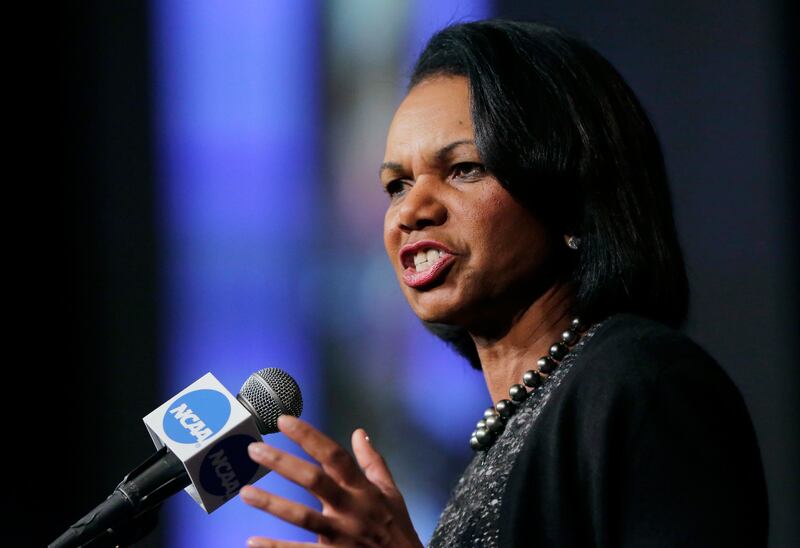
Condoleezza Rice: The democratization of education
Raised by a teacher and a high school guidance counselor in Birmingham, Alabama, Condoleezza Rice internalized the fundamental importance of education. “(It) was your armor against whatever was going on around you,” she once said in a speech.
Rice went on to prominent leadership roles in higher education and the U.S. government, becoming a distinguished professor and provost at Stanford University in the 1990s and, in the early 2000s, serving as the secretary of state under President George W. Bush. Under her leadership, Stanford recovered from its $20 million budget shortfall, hired more diverse faculty and enhanced its academic programs. Rice has emphasized the importance of education as a means of social mobility and advocated for policies that support disadvantaged students, ensuring they have access to resources they need to succeed. As a co-chair of the task force on education reform and national security, she’s drawn the link between the deficiencies in the American education system and the country’s future security and prosperity.
Rice now serves as the director of the Hoover Institution, a public policy think tank at Stanford, which, along with economic freedom issues, examines higher education financing, the role of universities in society, academic freedom and the impact of technological advancements on education.
Amid political polarization and divisiveness, Rice sees education as a unifying force. “I believe that we can come together around a couple of principles,” Rice said at a Hoover education summit. “Most important of those principles is that everybody deserves a high-quality education.” —Mariya Manzhos
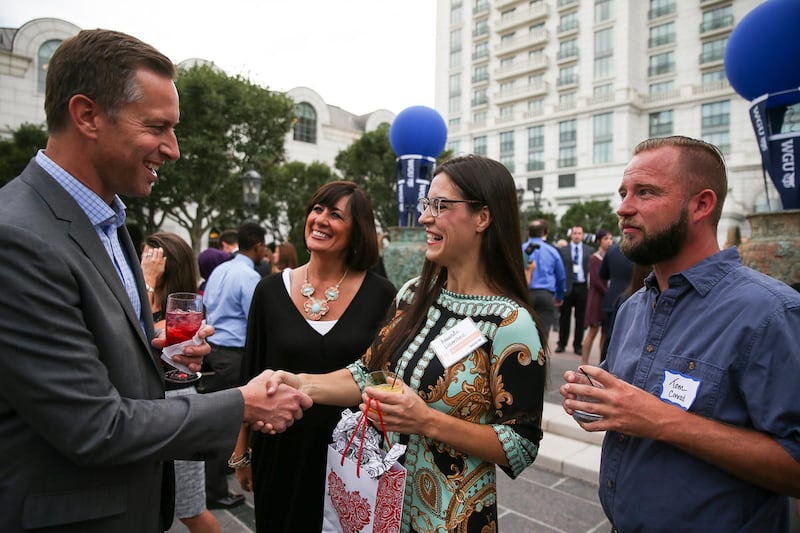
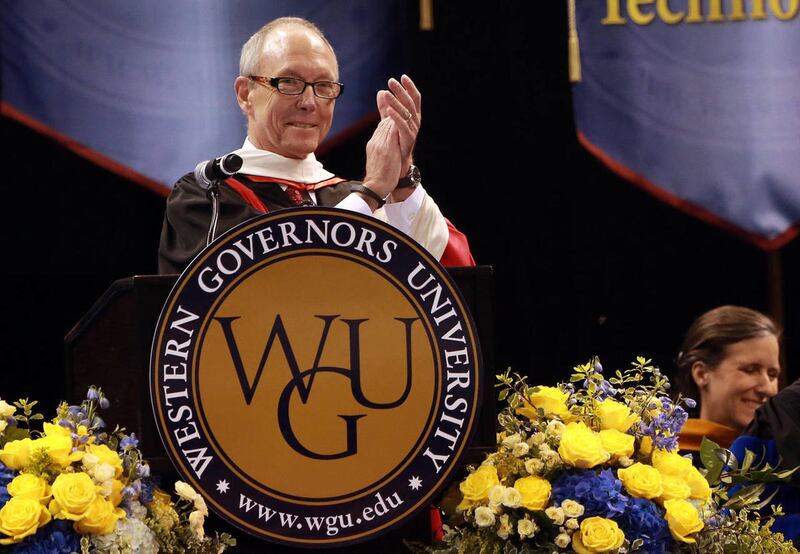
Scott Pulsipher: The case for competency
In less than three decades since its formation, Western Governors University has become the country’s largest university, boasting some 175,000 current students. The secret? A “competency-based” approach that prioritizes acquiring skills over checking boxes.
That’s how Scott Pulsipher, WGU’s president, describes it. “Ultimately, becoming proficient is the thing that matters, not how much time it took you to be proficient,” he explained. Instead of tracking progress toward graduation based on credit hours, or hours spent in class, WGU gauges a student’s competency. And as soon as a student passes an exam showing her proficiency in those areas, she moves onto other subject materials.
That template has revolutionized higher education for nontraditional students, who can now achieve a bachelor’s degree through WGU in 2 1/2 years. Some do it even faster, if they enter their degree program with experience or knowledge in the field. “This is someone who already has a busy life,” Pulsipher said. “They have a job, they have family commitments, they have a variety of other things that they’re having to manage. And they need to figure out how to fit education into their already busy lives.” Through an online WGU program, they can enroll in as many courses as they want during the six-month term, and any previous work or educational experience offers a leg up.
“We do have to reaffirm what is still true, which is that education is still one of the single greatest catalysts to help someone change their life for the better,” he said. A lot of competing voices are arguing against the economic benefits of higher education; Pulsipher, in turn, argues against higher education’s traditional model, but pushes for a revamped version better suited to serve a diverse population of prospective students. “Most institutions,” he said, “still haven’t figured that component out.” — Samuel Benson
This story appears in the September 2024 issue of Deseret Magazine. Learn more about how to subscribe.