

Yuna Ku,BBC Koreanand
Koh Ewe

 Getty Images
In a matter of days, three big names in South Korea’s entertainment industry have made headlines in separate scandals that could derail their careers.
The allegations that have embroiled comedians Park Na-rae and Cho Sae-ho, as well as veteran actor Cho Jin-woong, are all different – ranging from workplace abuse to previous teenage detention to associations with a gang member.
But the results have been the same: departures from the television screens where they had worked their way up to become household names.
The scandals have also raised questions about the standards to which South Korea’s public figures are held – especially in the entertainment industry.
What are the scandals about?
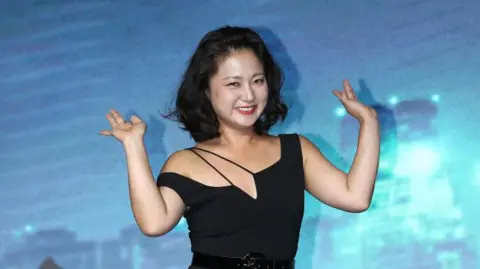
Park Na-rae, one of the country’s most successful female comedians, made headlines last week when two of her former managers lodged criminal complaints claiming she had verbally abused and physically assaulted them.
The 40-year-old had also made them do her personal chores, they alleged.
Park has denied these allegations and sued the former managers for blackmail, her agency said over the weekend.
She is separately being accused of receiving IV drips illegally at home, which violates the local medical law, local media reported – prompting a police investigation.
On Monday, Park Na-rae announced on social media that she had talked things through with her accusers, but would halt all broadcasting activities until things were “clearly resolved”.
“As a comedian whose job is to bring laughter and joy, I cannot continue to be a burden to my programs and colleagues,” she wrote on social media.
 Getty Images
Another comedian who has come under scrutiny over the past week is Cho Sae-ho.
Rumours started swirling last week that the 43-year-old was friends with a prominent local gang member and had received money to promote the latter’s business.
Backlash came swiftly, as social media users demanded that Cho Sae-ho be removed from the popular variety shows he hosted, You Quiz on the Block and Two Days and One Night.
On Tuesday, Cho Sae-ho’s agency announced that he would leave the shows – though it denied his links to the gang’s business activities.
In a social media statement, Cho Sae-ho said he “should have been more careful” with the people he met at events.
He added that he had decided to step down from the shows because he did not want to “burden” the programmes and their production teams.
The downfall that has generated the most debate comes from veteran actor Cho Jin-woong, who said over the weekend that he would quit acting.
 Getty Images
The abrupt announcement came after a viral news report that said Cho Jin-woong, as a teenager in the 1990s, had been sent to a juvenile detention centre on allegations of robbery and sexual assault. As an adult, he also assaulted a person in his theatre troupe and had his driving licence suspended for drink driving, the report said.
The 49-year-old’s agency said that Cho Jin-woong had confirmed wrongdoing in his youth, but denied sexually assaulting anyone.
Broadcasters have scrambled to erase Cho Jin-woong from their platforms. A documentary series he narrated has now had the narration re-recorded, while the fate of Second Signal, the sequel to his hit TV series, remains unclear.
A debate over cancel culture
The allegations Cho Jin-woong faces have stirred heated debate about how much public figures should be forgiven for past mistakes.
“Why does Cho Jin-woong need to retire?” reads one social media comment. “Why should a flawed past remain the standard by which a person is judged decades later?”
Others, however, have argued that seeing him on screen could retraumatise his past victims.
“There are people who defend [Cho Jin-woong] by saying everyone makes mistakes when they’re young, but not everyone commits this level of crime,” wrote one social media user.
More broadly, the recent string of celebrity scandals has raised bigger questions about the standards to which South Koreans hold their celebrities. It’s a system that has sent rising stars into hiatus for being school bullies, and squeezed apologies out of them for simply dating other celebrities.
Culture critic Kim Sung-soo tells the BBC that in South Korea, audiences want to correct behaviour that they deem unacceptable – which, in the case of celebrities, often means disappearing from the screens.
“Celebrities are easy targets because their careers depend on reputation and popularity – things that are granted by the public,” culture critic Kim Sung-soo tells the BBC.
Now, just as Park, Cho Sae-ho and Cho Jin-woong promised to “reflect deeply” on their actions, it appears some among their audiences are also reflecting on how celebrities are treated.
“It’s absurd that people mistake this recurring pattern of targeting celebrities online – digging for flaws and pushing them out – as a moral issue,” one person wrote on X.
“I’m tired of this cancel-culture cycle, and I think it’s time for our society to seriously rethink online communities.”