Close Menu
  • Breaking News
  • Business
  • Career
  • Sports
  • Climate
  • Science
    • Tech
  • Culture
  • Health
  • Lifestyle
  • Facebook
  • Instagram
  • TikTok
Categories
  • Breaking News (5,701)
  • Business (331)
  • Career (4,779)
  • Climate (224)
  • Culture (4,759)
  • Education (5,013)
  • Finance (231)
  • Health (894)
  • Lifestyle (4,591)
  • Science (4,708)
  • Sports (352)
  • Tech (186)
  • Uncategorized (1)
Hand Picked

All you need to know about the International Space Station’s 25 years in orbit

December 24, 2025

Catering career path rapidly expanding at local high school | News

December 24, 2025

A national grant expands faith and health education – News

December 24, 2025

CES 2026 trends to watch: 5 biggest topics we’re expecting at the tech show

December 24, 2025
Facebook X (Twitter) Instagram
  • About us
  • Contact us
  • Disclaimer
  • Privacy Policy
  • Terms and services
Facebook X (Twitter) Instagram
onlyfacts24
  • Breaking News

    U.S. bans visas for ex-EU commissioner over alleged censorship

    December 24, 2025

    Nick Fuentes vows to oppose Vivek Ramaswamy’s Ohio governor bid

    December 24, 2025

    Video: India launches ‘heaviest satellite’ into orbit | Space

    December 24, 2025

    10-year Treasury yields dip as stronger GDP data clouds rate path

    December 24, 2025

    Kamala Harris claims it is sexist for people to mock her distinctive cackle

    December 24, 2025
  • Business

    Mapping trends in digital business research: from bit transformation to sustainable data-centric enterprises

    December 18, 2025

    YouTube 2025 Top Creators and Trending Topics List and Recap

    December 17, 2025

    Brussels aware of DPS initiative to clean up voter lists in the Western Balkans

    December 16, 2025

    Communicators know business acumen matters. Most don’t feel ready.

    December 12, 2025

    AI investment is a hot topic in the business community and policy authorities these days. As global ..

    November 26, 2025
  • Career

    Catering career path rapidly expanding at local high school | News

    December 24, 2025

    UND’s Academic And Career Exploration Has Career Guidance

    December 24, 2025

    What Employers Want Now—And How New Grads Can Stand Out

    December 24, 2025

    Municipal Court Judge Carter reflects on career, celebrates retirement after four decades

    December 24, 2025

    AP NewsTrump removes nearly 30 career diplomats from ambassadorial positionsThe Trump administration is recalling nearly 30 career diplomats who had taken up their posts in the Biden administration..1 hour ago

    December 24, 2025
  • Sports

    Thunder’s Nikola Topic returns to court amid cancer treatment

    December 23, 2025

    The Seahawks’ win Thursday is still a hot topic around the NFL, not just for how special the game was but what it meant

    December 20, 2025

    Yahoo! Sports UKNikola Topic out here in pregame warmups. First time …Ben Stokes and Jofra Archer were involved in a heated exchange as England toiled in Adelaide and Australia tightened their grip on the Ashes….4 hours ago

    December 19, 2025

    Collective bargaining for college sports becomes hot topic for athletic directors

    December 12, 2025

    Fanatics Launches a Prediction Market—Without the G-Word

    December 5, 2025
  • Climate

    PA Environment Digest BlogStories You May Have Missed Last Week: PA Environment & Energy Articles & NewsClips By TopicPA Environment Digest Puts Links To The Best Environment & Energy Articles and NewsClips From Last Week Here By Topic–..1 day ago

    December 16, 2025

    PA Environment & Energy Articles & NewsClips By Topic

    December 15, 2025

    PA Environment & Energy Articles & NewsClips By Topic

    December 8, 2025

    ‘Environmental Resilience’ topic of Economic Alliance virtual Coffee Chat Dec. 9

    December 7, 2025

    Insights from World Bank Group Country Climate and Development Reports covering 93 economies

    December 3, 2025
  • Science
    1. Tech
    2. View All

    CES 2026 trends to watch: 5 biggest topics we’re expecting at the tech show

    December 24, 2025

    Beware! 5 topics that you should never discuss with ChatGPT

    December 14, 2025

    Off Topic: Vintage tech can help Gen Z fight digital fatigue

    December 6, 2025

    Snapchat ‘Topic Chats’ Lets Users Publicly Comment on Their Interests

    December 5, 2025

    All you need to know about the International Space Station’s 25 years in orbit

    December 24, 2025

    Before trips to Mars, we need better protection from cosmic rays

    December 24, 2025

    Get In, We’re Going Moonbound: Meet NASA’s Artemis Closeout Crew

    December 24, 2025

    Why Scientists Are Performing Brain Surgery on Monarchs

    December 24, 2025
  • Culture

    Hawaii transplants find community, culture in Utah

    December 24, 2025

    The year’s defining pop culture moments

    December 24, 2025

    Remembering those in politics, culture and media who died in 2025

    December 24, 2025

    From ‘rock n’ roll’ to TV dinners to ‘the Battle of the Sexes,’ boomers influenced American culture

    December 24, 2025

    Cancel Culture’s Boomerang Effect – The Atlantic

    December 24, 2025
  • Health

    Medical evacuations out of U.S. Central and U.S. Africa Commands among the active and reserve components of the U.S. Armed Forces, 2024

    December 23, 2025

    Obesity and overweight

    December 20, 2025

    Ambulatory health care visits among active component members of the U.S. Armed Forces, 2024

    December 19, 2025

    Podcast in Napa Valley is making mental health the focus and teenagers the spokespeople – The Press Democrat

    December 19, 2025

    Five tips to manage your mental health during the holidays | Cultivating Health

    December 16, 2025
  • Lifestyle
Contact
onlyfacts24
Home»Science»Before trips to Mars, we need better protection from cosmic rays
Science

Before trips to Mars, we need better protection from cosmic rays

December 24, 2025No Comments
Facebook Twitter Pinterest LinkedIn Tumblr Email
EfsQTogjTuuyHadVz9APxS 1600 80.png
Share
Facebook Twitter LinkedIn Pinterest Email

This article was originally published at The Conversation. The publication contributed the article to Space.com’s Expert Voices: Op-Ed & Insights.

The first step on the moon was one of humanity’s most exciting accomplishments. Now scientists are planning return trips – and dreaming of Mars beyond.

Next year, Nasa’s Artemis II mission will send four astronauts to fly around the moon to test the spacecraft before future landings. The following year, two astronauts are expected to explore the surface of the moon for a week as part of Nasa’s Artemis III mission.


You may like

And finally, the trip to Mars is planned for the 2030s. But there’s an invisible threat standing in the way: cosmic rays.

When we look at the night sky, we see stars and nearby planets. If we’re lucky enough to live somewhere without light pollution, we might catch meteors sliding across the sky. But cosmic rays – consisting of protons, helium nuclei, heavy ions and electrons – remain hidden. They stream in from exploding stars (galactic cosmic rays) and our very own sun (solar particle events).

They don’t discriminate. These particles carry so much energy and move so fast that they can knock electrons off atoms and disrupt molecular structures of any material. That way, they can damage everything in their path, machines and humans alike.

The Earth’s magnetic field and atmosphere shield us from most of this danger. But outside Earth’s protection, space travellers will be routinely exposed. In deep space, cosmic rays can break DNA strands, disrupt proteins and damage other cellular components, increasing the risk of serious diseases such as cancer.

Breaking space news, the latest updates on rocket launches, skywatching events and more!

The research challenge is straightforward: measure how cosmic rays affect living organisms, then design strategies to reduce their damage.

Ideally, scientists would study these effects by sending tissues, organoids (artificially made organ-like structures) or lab animals (such as mice) directly into space. That does happen, but it’s expensive and difficult. A more practical approach is to simulate cosmic radiation on Earth using particle accelerators.

Cosmic ray simulators in the US and Germany expose tissues, plants and animals to different components of cosmic rays in sequence. A new international accelerator facility being built in Germany will reach even higher energies, matching levels found in space that have never been tested on living organisms.


You may like

But these simulations aren’t fully realistic. Many experiments deliver the entire mission dose in a single treatment. This is like using a tsunami to study the effects of rain.

In real space, cosmic rays arrive as a mixture of high-energy particles hitting simultaneously, not one type at a time. My colleagues and I have suggested building a multi-branch accelerator that could fire several tuneable particle beams at once, recreating the mixed radiation of deep space under controlled laboratory conditions. For now, though, this kind of facility exists only as a proposal.

Beyond better testing, we need better protection. Physical shields seem like the obvious first defense. Hydrogen-rich materials such as polyethylene and water-absorbing hydrogels can slow charged particles. Although they are used, or planned to be used, as spacecraft materials, their benefits are limited.

Particularly galactic cosmic rays, the ones that arrive from far exploding stars, are so energetic that they can penetrate through physical shielding. They can even generate secondary radiation that increases exposure. So, effective protection by using solely physical shields remains a major challenge.
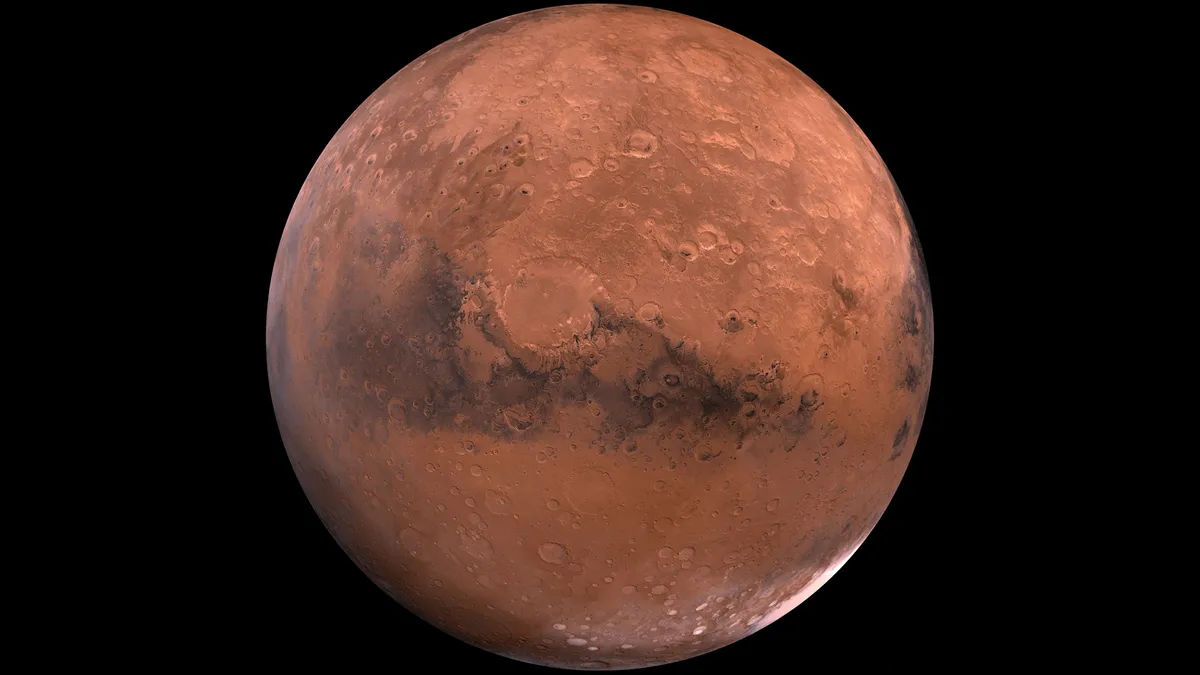
An image of Mars

Cosmic rays may stand in humanity’s way to Mars (Image credit: NASA)

Nature’s armor

That’s why scientists are exploring biological strategies. One approach is to use antioxidants. These molecules can protect DNA from harmful chemicals that are produced when cosmic rays hit living cells.

Supplementing with CDDO-EA, a synthetic antioxidant, reduces cognitive damage caused by simulated cosmic radiation in female mice. In the study, mice exposed to simulated cosmic radiation learned a simple task more slowly compared to unexposed mice. However, mice that received the synthetic antioxidant performed normally despite being exposed to simulated cosmic radiation.

Another approach involves learning from organisms with extraordinary abilities. Hibernating organisms become more resistant to radiation during hibernation. The mechanisms on how hibernation protects from radiation are not fully understood yet. Still, inducing hibernation-like conditions in non-hibernating animals is possible and can make them more radioresistant.

Tardigrades – microscopic creatures also known as water bears – are also extremely radioresistant, especially when dehydrated. Although we can’t hibernate or dehydrate astronauts, the strategies these organisms use to protect cellular components might help us preserve other organisms during long space journeys.

Microbes, seeds, simple food sources and even animals that could later become our companions might be kept in a protected state for a while. Under calmer conditions, they could then be brought back to full activity. Therefore, understanding and harnessing these protective mechanisms could prove crucial for future space journeys.

A third strategy focuses on supporting organisms’ own stress responses. Stressors on Earth, such as starvation or heat, have driven organisms to evolve cellular defenses that protect DNA and other cellular components. In a recent preprint (a paper that is yet to be peer reviewed), my colleague and I suggest that activating these mechanisms through specific diets or drugs may offer additional protection in space.

Physical shields alone won’t be enough. But with biological strategies, more experiments in space and on Earth, and the construction of new dedicated accelerator complexes, humanity is getting closer to making routine space travel a reality. With current speed, we are probably decades away from fully solving cosmic-ray protection. Greater investment in space radiation research could shorten that timeline.

The ultimate goal is to journey beyond Earth’s protective bubble without the constant threat of invisible, high-energy particles damaging our bodies and our spacecraft.

Share. Facebook Twitter Pinterest LinkedIn Tumblr Email

Related Posts

All you need to know about the International Space Station’s 25 years in orbit

December 24, 2025

Get In, We’re Going Moonbound: Meet NASA’s Artemis Closeout Crew

December 24, 2025

Why Scientists Are Performing Brain Surgery on Monarchs

December 24, 2025

Scientists Found the Deepest Known Arctic Vent—and It’s Teeming With Life

December 24, 2025
Add A Comment
Leave A Reply Cancel Reply

Latest Posts

All you need to know about the International Space Station’s 25 years in orbit

December 24, 2025

Catering career path rapidly expanding at local high school | News

December 24, 2025

A national grant expands faith and health education – News

December 24, 2025

CES 2026 trends to watch: 5 biggest topics we’re expecting at the tech show

December 24, 2025
News
  • Breaking News (5,701)
  • Business (331)
  • Career (4,779)
  • Climate (224)
  • Culture (4,759)
  • Education (5,013)
  • Finance (231)
  • Health (894)
  • Lifestyle (4,591)
  • Science (4,708)
  • Sports (352)
  • Tech (186)
  • Uncategorized (1)

Subscribe to Updates

Get the latest news from onlyfacts24.

Follow Us
  • Facebook
  • Instagram
  • TikTok

Subscribe to Updates

Get the latest news from ONlyfacts24.

News
  • Breaking News (5,701)
  • Business (331)
  • Career (4,779)
  • Climate (224)
  • Culture (4,759)
  • Education (5,013)
  • Finance (231)
  • Health (894)
  • Lifestyle (4,591)
  • Science (4,708)
  • Sports (352)
  • Tech (186)
  • Uncategorized (1)
Facebook Instagram TikTok
  • About us
  • Contact us
  • Disclaimer
  • Privacy Policy
  • Terms and services
© 2025 Designed by onlyfacts24

Type above and press Enter to search. Press Esc to cancel.