

Update 5:02 p.m. EST (2202 UTC): SpaceX confirms deployment of the 25 Starlink satellites.
Update 12:10 p.m. EST (1710 UTC): SpaceX pushed back the T-0 liftoff time to the end of the window.
Update 11:23 a.m. EST (1623 UTC): Adding addition comments from SpaceX.
Update 10:45 a.m. EST (1545 UTC): SpaceX pushed back the T-0 liftoff time; adding comments from NASA.
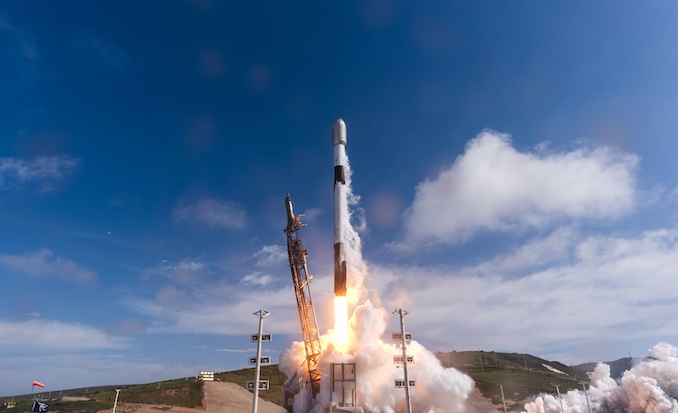
SpaceX returned its Falcon 9 rocket flight mission with a Saturday afternoon launch, following a brief stand down period lasting less than a week.
The Starlink 17-33 mission adds 25 Starlink satellites to the company’s megaconstellation in low Earth orbit. There a more than 9,600 satellites currently in orbit, according to stats maintained by astronomer and expert orbital tracker, Jonathan McDowell.
Liftoff from pad 4E at Vandenberg Space Force Base (VSFB) happened Saturday, Feb. 7, at 12:58:09 p.m. PST (3:58:09 p.m. EST / 2058:09 UTC). The rocket flew on a south-southwesterly trajectory.
SpaceX launched the Starlink 17-33 mission using the Falcon 9 first stage booster with the tail number 1088. This was its 13th flight following the launches of missions, like NASA’s SPHEREx, Transporter-12 and two batches of satellites for the National Reconnaissance Office’s proliferated architecture satellite constellation.
Nearly 8.5 minutes after liftoff, B1088 landed on the drone ship, ‘Of Course I Still Love You,’ positioned in the Pacific Ocean. This was the 176th landing on this vessel and the 568th booster landing for SpaceX to date.
Return to flight
SpaceX is returning to its more typical pace of launch after a rare quiet period and some delayed missions.
Originally, following the launch of the Starlink 17-32 mission from VSFB on Monday, Feb. 2, the company was set to fly the Starlink 6-103 mission from Space Launch Complex 40 at Cape Canaveral Space Force Station (CCSFS) on Tuesday, Feb. 3.
However, later on Monday, SpaceX announced an in-flight anomaly after payload deployment.
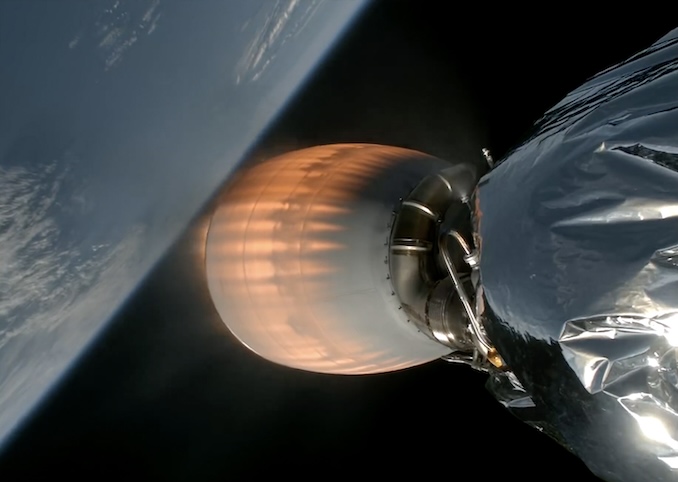
“During today’s launch, the second stage experienced an off-nominal condition during preparation for the deorbit burn,” SpaceX said in a statement on Feb. 2. “The vehicle then performed as designed to successfully passivate the stage. The first two MVac burns were nominal and safely deployed all 25 Starlink satellites to their intended orbit.”
While NASA conducted a fueling test of its Space Launch System rocket, SpaceX rolled the Starlink satellites for the Starlink 6-103 mission back from pad 40 to its Hangar X facilities at NASA’s Kennedy Space Center. Hours later, it rolled the booster, tail number 1101, out to the pad to prepare for the forthcoming launch of Crew-12 set for next week.
On Friday evening, the Federal Aviation Administration (FAA) announced the closure of the SpaceX-led mishap investigation, allowing SpaceX to resume FAA-licensed flights.
“The FAA oversaw and accepted the findings of the SpaceX-led investigation. The final mishap report cites the probable root cause was the Falcon 9 stage 2 engine’s failure to ignite prior to the deorbit burn,” the FAA said in a statement. “SpaceX identified technical and organizational preventative measures to avoid a reoccurrence of the event. The Falcon 9 vehicle is authorized to return to flight.”
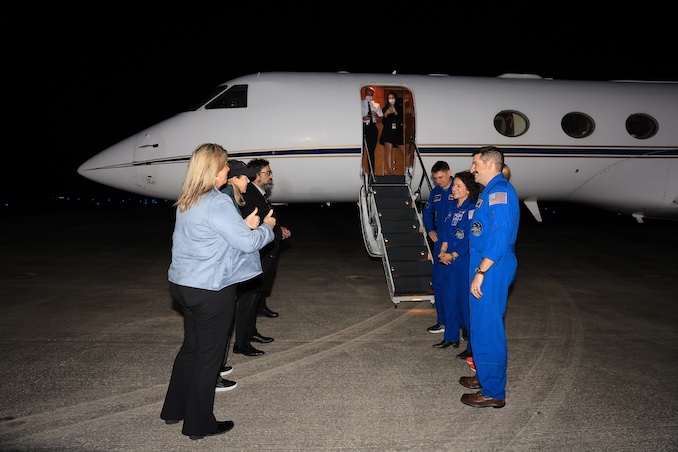
Following the arrival of the Crew-12 quartet at KSC on Friday night, NASA published a statement noting its assessment of the mishap and whether or not it would impact the crewed flight to the International Space Station.
“As part of the agency’s Flight Readiness Review, NASA evaluated the findings from SpaceX’s review of a Starlink mission where a Falcon 9 second stage experienced an issue during preparations for its deorbit burn,” the agency wrote. “NASA and SpaceX have determined, since the Falcon 9 second stage flies a different deorbit profile for NASA’s crewed missions, there is no increased risk to crew safety during ascent. The agency and SpaceX are ‘go’ for Crew-12 to launch to the International Space Station.”
Safety and reliability are at the core of SpaceX’s operations. Thanks to our launch frequency, we’re able to quickly gather unprecedented levels of flight data to quickly learn and innovate
— SpaceX (@SpaceX) February 7, 2026
SpaceX also updated its launch page for the Starlink 17-32 mission to provide additional details about the anomaly.
“During launch, the second stage experienced an off-nominal condition caused by a failed ignition due to a gas bubble in the transfer tube ahead of the planned deorbit burn,” SpaceX wrote. “The vehicle then performed as designed to successfully passivate the stage, which reentered Earth’s atmosphere approximately 10.5 hours later over the Southern Indian Ocean. No reports have been received of debris sightings or third-party damage.”
The company went on to describe the importance of performing deorbit burns on its upper stages when possible. Across 2024 and 2025 it said 16 upper stages were left passivated in space and six have since reentered into the atmosphere.
“The remaining 10 second stages on-orbit had no deorbit planned per the approved mission profiles and are continuously tracked, allowing satellites with maneuvering capabilities to adjust accordingly,” SpaceX wrote. “This deorbit reduction effort requires novel methods in order to perform deorbit burns on missions that would not otherwise have the performance to, such as missions to Geostationary Transfer Orbit.
“These tests provide critical data and insights, continuously improving the reliability of Falcon and protecting public safety across all missions.”