
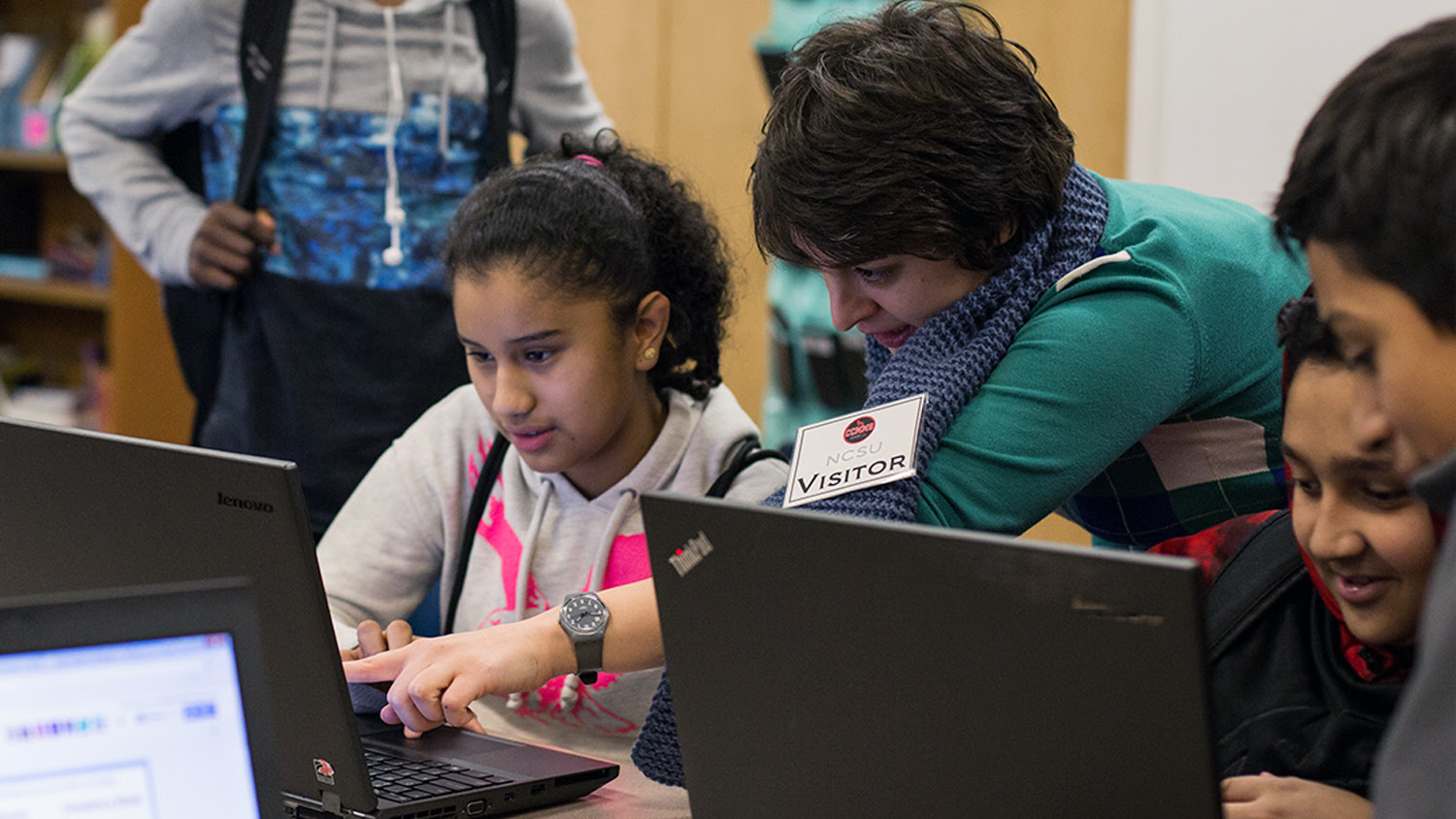
Strategies from Laura B. Fogle, a former elementary and middle school instructional technology facilitator and director of the College of Education’s Media and Education Technology Resource Center (METRC); Krista Glazewski, a former middle school teacher and executive director of the Friday Institute for Educational Innovation; and Scott Summers, a former middle and high school English teacher, former high school librarian and associate director of METRC.
Three Tips for Differentiating Instruction
1. Question your pedagogical goals.
Every teacher should consider their pedagogical goals: What are they trying to accomplish in their instruction? What are their learning goals? How do they want to see students engage and interact? Additionally, it is important to critically evaluate AI outputs before implementing them in lesson planning. Does the output match the level of the students? Are there other resources that will help students engage or understand the material more effectively than what AI has suggested?
2. Carefully craft prompts for AI tools.
When using AI tools, provide context, a role and be specific about grade level, standards and the goals of the lesson. This can save time and allow you to fine tune via chatting with the chatbot versus a piecemeal, conversational approach from the start. Research has shown that AI users who engage in several exchanges with a GenAI chat bot create higher quality responses than those who accept the first response. The AI for Education website provides an extensive prompt library, a list of prompting strategies and guides for integrating Generative AI into math and literacy that teachers can use to develop their prompt generation skills.
3. Collaborate to set expectations around the use of AI.
Discuss AI expectations with your peers in your professional learning teams or departments to ensure a unified approach. In many cases, a school or technology services division of the school district will also provide guidance that to help set classroom norms for AI use. The N.C. Department of Public Instruction has a robust guide available for teachers to learn about best practices when implementing AI tools for use by students or using AI in their professional capacity as educators.
Additionally, students are more likely to follow guidelines when they participate in their creation. So, if teachers start by building students’ AI literacy with developmentally appropriate resources, they can have meaningful conversations about AI’s benefits and risks, including over-reliance and loss of learning opportunities. Teachers should be clear about their motivations for learning activities and how AI use can support or undermine the learning objectives.