

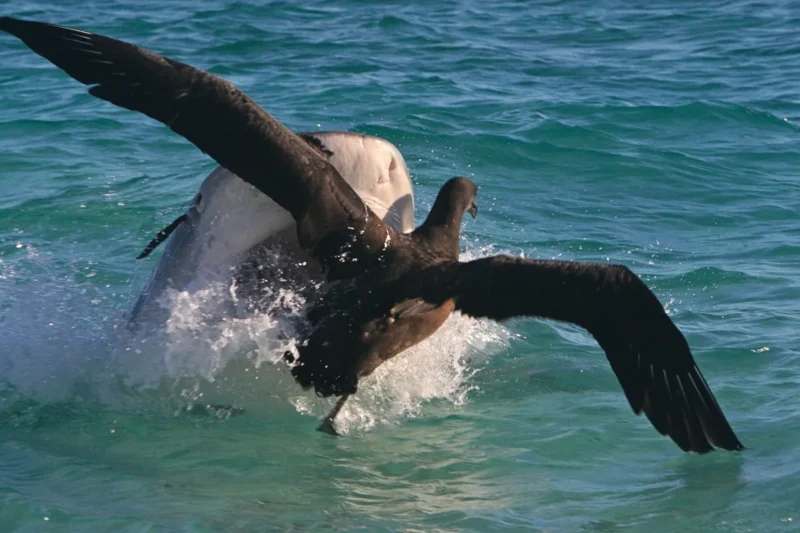
Amazing photos of tiger sharks attacking albatrosses have helped inform researchers studying how the annual hunt affects other predators.
Joe Spring is a science editor and photographer who brings his camera with him on research expeditions. In his newsletter, Field and Lab, Spring recounts spending five field seasons on East Island, a remote coral island roughly 500 miles northwest of Hawaii.
Although he was there tagging sea turtles, albatross raise their chicks on East Island, a former military outpost, and after watching them mature, he witnessed the fledglings attempting to leave the island.
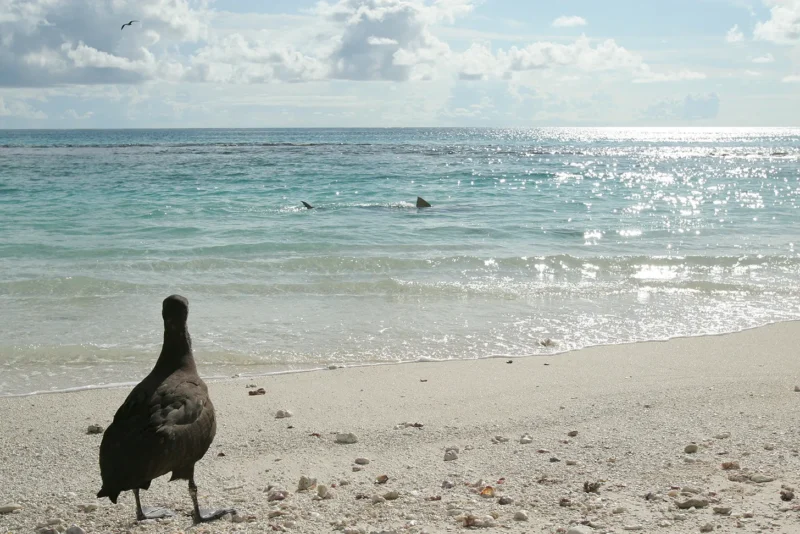
However, their plight attracts predators, namely tiger sharks, which gather in great numbers around East Island in the hope that an albatross chick will crash land in front of them.
“Before the birds hit the water, the sharks swam around slowly,” Spring writes in Field and Lab. “But when a bird landed nearby, the sharks lit up and took off like darts. They launched their heads out of the water with their jaws open to swallow birds.”

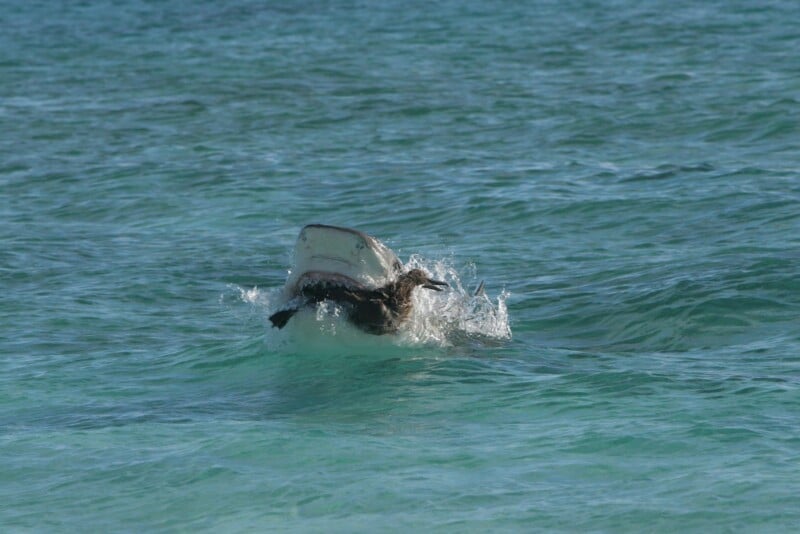
With no cell coverage, internet, or cable, Spring says watching the albatrosses run the tiger shark gauntlet became his entertainment.
“Sometimes I saw the interaction between predators and prey as I did my last morning patrol of the island for nesting sea turtles,” he says.
“At other times, I was lucky enough to be sitting on the shore with my camera at the ready to capture a meeting between the birds and sharks.”

Turf Wars
Spring’s photos were used in conjunction with a new study by the University of Hawaii at Mānoa Hawaii Institute of Marine Biology (HIMB), which found that the annual summer arrival of fledgling seabirds also attracts many tiger sharks — which in turn affects other predators.
“We discovered that tiger sharks gather around small islands in summer to hunt fledgling seabirds, which, in turn, forces other smaller sharks to adjust their habitat use,” says Chloé Blandino, lead author of the study and shark husbandry research specialist at HIMB Shark Lab.
“It’s a clear example of how a seasonal food source can influence habitat use by an entire predator community.”
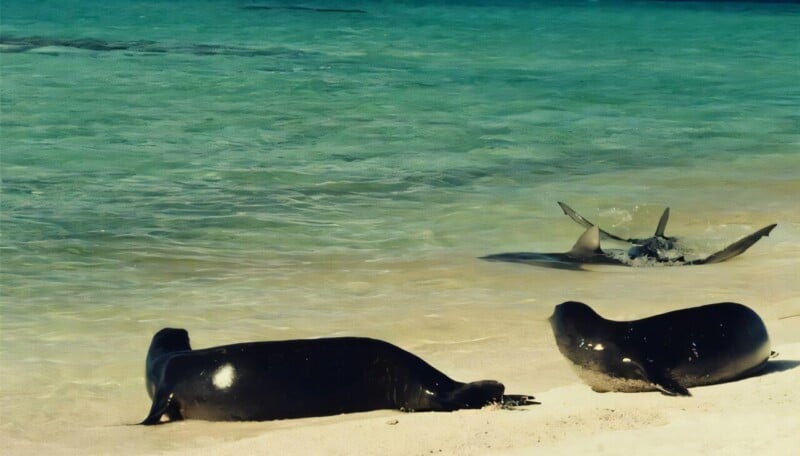
The researchers found that the presence of tiger sharks caused smaller gray reef sharks to avoid certain areas to reduce the risk of predation. At the same time, Galapagos sharks adjusted their activity by using different times or zones within the atoll to lessen competition. After the seabirds dispersed, the tiger sharks moved away, allowing the other shark species to return to their original habitats.
Fish surveys confirmed that these behavioral shifts were driven by predator avoidance and competitive interactions rather than changes in the distribution of their typical prey.
Update 1/8: An earlier version of this article referred to Tern Island; the correct island is East Island. We apologize for the error.