

UPDATE: The deadline for Tennessee’s Education Freedom Scholarship applications have been extended.
The new deadline to apply is Friday, February 6 at 5:00pm eastern time.
Sen. Marsha Blackburn said the extension is due to the recent winter storm that impacted Tennessee.
PREVIOUS STORY: Applications for the 2026-2027 school year’s Tennessee Education Freedom Scholarship have already exceed the amount from the previous school year.
More than 50,000 applications have already been submitted after only two days. The scholarship applications opened on Tuesday, January 13.
In comparison, only around 42,000 applications were submitted for the entire 2025-2026 school year. This school year’s application numbers already exceed the prior year by more than 7,500.
The 50,304 scholarships as of January 15 include both new and renewal applications, according to Gov. Bill Lee. He adds that almost all of previously enrolled families have already reapplied.
Roughly half of those applicants applied for income prioritized scholarships.
Gov. Lee says 18 additional schools have registered to participate in the 2026-2027 school year. You can find the list of participating schools here.
“As demand for Education Freedom Scholarships continues to grow, I look forward to working with the General Assembly to increase the number of available scholarships for the 2026-27 school year,” said Gov. Lee. “It’s clear that Tennessee parents want choices when it comes to their child’s education, and expanding access to this program will ensure every child has an opportunity to thrive, regardless of income or zip code.”
Scholarship applications will remain open through January 30.
PREVIOUS STORY: Applications for Tennessee’s Education Freedom Scholarship open Tuesday, marking the second school year the program will be available to students statewide.
For the 2025-2026 school year, 20,000 students received vouchers. Nearly 43,000 students applied for spots across 241 eligible schools.
Each voucher is $7,300, and the program costs a total $144 million. Lawmakers could increase the number of vouchers available this session.
This year’s program will prioritize applicants in a tiered system.

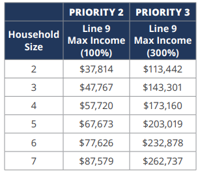
- Priority 1: Current recipients
- Priority 2: Eligible students based on household income (100% of federal free or reduced-price lunch limit).
- Priority 3: Eligible students based on household income (300% of federal free or reduced-price lunch limit)
- Priority 4: Eligible students currently enrolled in a TN public school or who are eligible to enroll in kindergarten in a public school next year
- Priority 5: All other eligible students
Applications will remain open through January 30 at 5:00pm eastern. You can find the application here.
Last year, the Tennessee Department of Education considered applicants in two separate pools with 10,000 spots reserved for each: income-based and general applicants.
Vouchers first became available to Hamilton County students as part of a pilot program in the 2023-2024 academic year.
The Education Freedom Scholarship program is currently capped at 20,000 seats, with a potential increase of 5,000 for each year the number of applications exceeds 75% of program capacity.
Tennessee Representative Kevin Raper (R) told Local 3 he expects a push to double the number of scholarships available, though State Senator Bo Watson (R) cautioned the program depends on available funding.


“There’s obviously demand there,” Watson said. “The caveat is that we have to have the finances to do that, so the growth of the Education Freedom Scholarship is really limited by the resources that the state has.”
Audit shows some students using vouchers didn’t previously attend low-performing schools
A first-ever audit of the program by the state comptroller’s office shows Memphis-based students relied most on the vouchers through the 2024-2025 school year. Nearly 500 students from Chattanooga used a voucher that year.
Half of students in Chattanooga using vouchers who previously attended public schools were enrolled in schools with A, B or C grades. That’s even less than in Nashville and Memphis.
The percentage of students participating in the Education Savings Account (ESA) program who came from Tennessee public schools declined as the program expanded. In 2022-2023, 67% came from a public school, compared to 28% for 2024-2025. The percentage of students re-enrolling in the program grew to 45%.

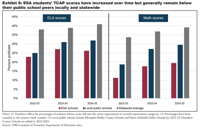
The audit also shows average tuition exceeds the scholarship amount by around $3,000. Additionally, voucher students earned lower scores on TCAP standardized tests than their public school peers.
Before the program became universal, 3,693 students participated in 2024-2025, below the capacity of 5,000 students. Just 7.2% of eligible students applied.
The department could improve communication with parents and schools to help potential voucher families, the audit said.
The topic of school vouchers continues to split state lawmakers in Nashville.
While Watson and Raper supported previous efforts, Representative Yusuf Hakeem, who represents Chattanooga, walked out of Governor Bill Lee’s 2025 State of the State over concerns about the voucher program.
Advocates believe it helps students leave low-performing schools for a better education, while critics argue it takes funding away from public schools.
Ben Connor, a member of the Hamilton County School Board, told Local 3 in a text that vouchers are a “scam” and are “stealing public funds.”
“It’s absolutely a scam,” Connor said. “We’re seeing an exorbitant amount of people who have never stepped foot in a public school utilizing this; stealing public funds to provide for public schools. It is again, a stipend for people who can already afford to send their kids to private schools.”
We’ve reached out to Hamilton County Schools to learn more about any possible impacts to enrollment and the budget as a result of vouchers.
Hamilton County Schools does offer its own school choice program, called Choose Hamilton. It allows students to apply to Future Ready Institutes and Magnet Schools within the district.
Tennessee is one of roughly 30 states to offer school vouchers.