

NEWYou can now listen to Fox News articles!
The first time I spoke to Jeff Bezos, he had founded Amazon as an online bookstore and made himself available to all kinds of journalists — a “political genius,” said the New York Times Magazine, a “brilliant, charming, hyper, and misleadingly goofy mastermind.” In 1999, having blown past the naysayers who scoffed at the strange notion of online retailing, the 35-year-old businessman was named Time’s Person of the Year.
Nearly a decade-and-a-half later, as one of the world’s richest men, Bezos spent $250 million of his personal fortune to buy the Washington Post from Katharine Graham’s family.
And now he should fold his cards and sell it.
It’s a different era for the industry and a very different Bezos, one who is comfortable slashing a third of the paper’s staff.
Having initially declared that “the duty of the paper is to the readers, not the owners,” Bezos, whose Blue Origin company has federal contracts, is actively trying to repair his once-strained relationship with President Donald Trump. Amazon donated $1 million to Trump’s inauguration.
While management has made more than its share of mistakes, I don’t think it’s an exaggeration to say that Bezos has destroyed what was once one of America’s great newspapers.
I bring my personal history to the table. I spent 29 years at the Post, working for Bob Woodward’s investigative SWAT team, as Justice Department reporter, as New York bureau chief, and eventually as media reporter and columnist.
In the 1980s and ’90s, when newspapers really mattered, the Post, while lacking the resources of the New York Times, delivered scoops with an all-star team, from politics (David Broder and Dan Balz) to sports (Tony Kornheiser, Michael Wilbon and Tom Boswell) to the metro desk (Woodward and Bernstein). And there was the freewheeling Style section of Sally Quinn and many other narrative writers.
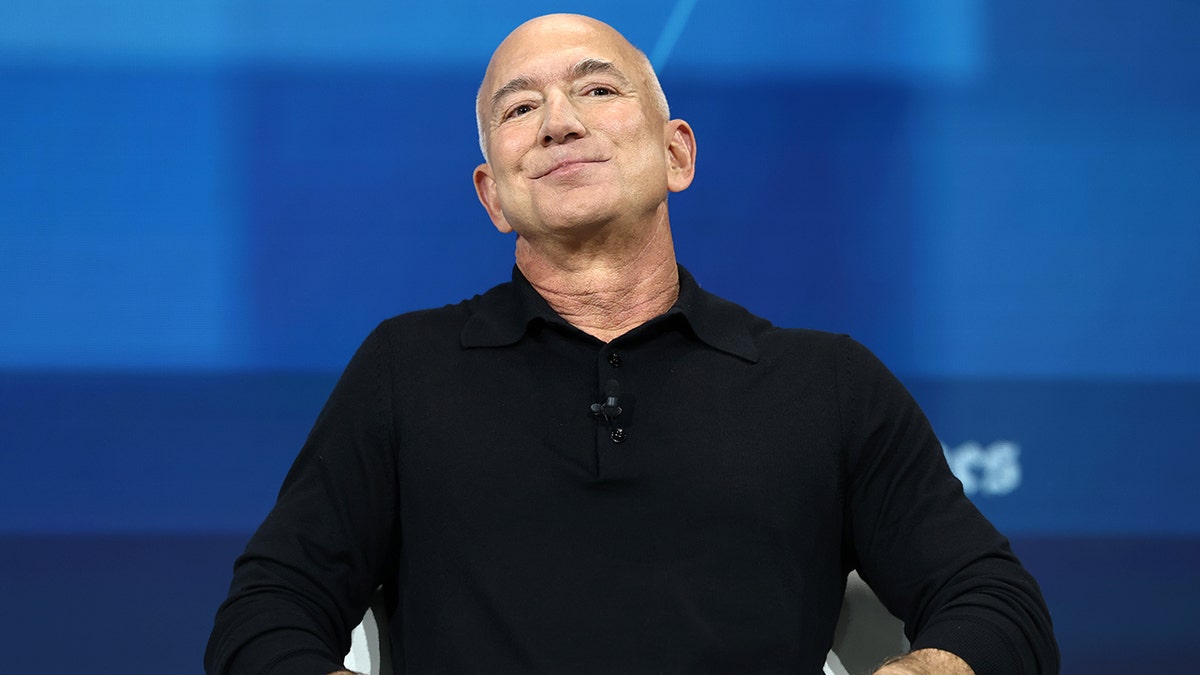
Jeff Bezos, founder and executive chairman of Amazon and owner of the Washington Post, looks out into the crowd during the New York Times annual DealBook summit at Jazz at Lincoln Center on Dec. 4, 2024, in New York City. (Michael M. Santiago/Getty Images)
This was the paper of Watergate, helping to drive Richard Nixon from office, after defying his administration in running the Pentagon Papers, documenting the lies of the Vietnam War. It was the newspaper of the legendary Ben Bradlee, whose retirement I covered after being secretly briefed. Despite occasional blunders (such as Janet Cooke’s fraud), it was glamorized in two movies (Robert Redford and Dustin Hoffman in “All the President’s Men,” Meryl Streep and Tom Hanks in “The Post”), inspiring legions of young graduates to go into journalism.
When Bezos fired 300 journalists the other day, he completed the wave of destruction that had already left the Post a shell of its former self. Those dismissed included such remaining stars as Lizzie Johnson, who said she was “devastated” as she reported from the Ukraine war zone without heat or running water. And Marty Weil, a sardonic night-shift guy who has been at the paper for 60 years. And Sarah Ellison, an elegant writer who came from Vanity Fair. And this wrecking ball followed several earlier rounds of layoffs.
Bezos doesn’t care. I just think he’s bored with the property he once believed would bring him instant credibility. He’s more interested in his rocket company. The Post is a blip on his global radar.
PROMINENT PITTSBURGH NEWSPAPER THAT PREVIOUSLY ENDORSED TRUMP TO SHUTTER THIS YEAR
I’m not in the camp that says Bezos should subsidize the paper forever just because he’s uber-rich. With the paper losing $100 million last year, he’s entitled to look for a path to profitability. But Bezos is getting absolutely hammered by the media.
“We’re witnessing a murder,” wrote Ashley Parker, now with the Atlantic.
Liberal commentator Charlie Sykes offered this headline: “Gutless Billionaire Guts the Post.”
Former executive editor Marty Baron, who previously ran the prize-winning Boston Globe, declared: “Bezos’ sickening efforts to curry favor with President Trump have left an especially ugly stain of their own. This is a case study in near-instant, self-inflicted brand destruction.”
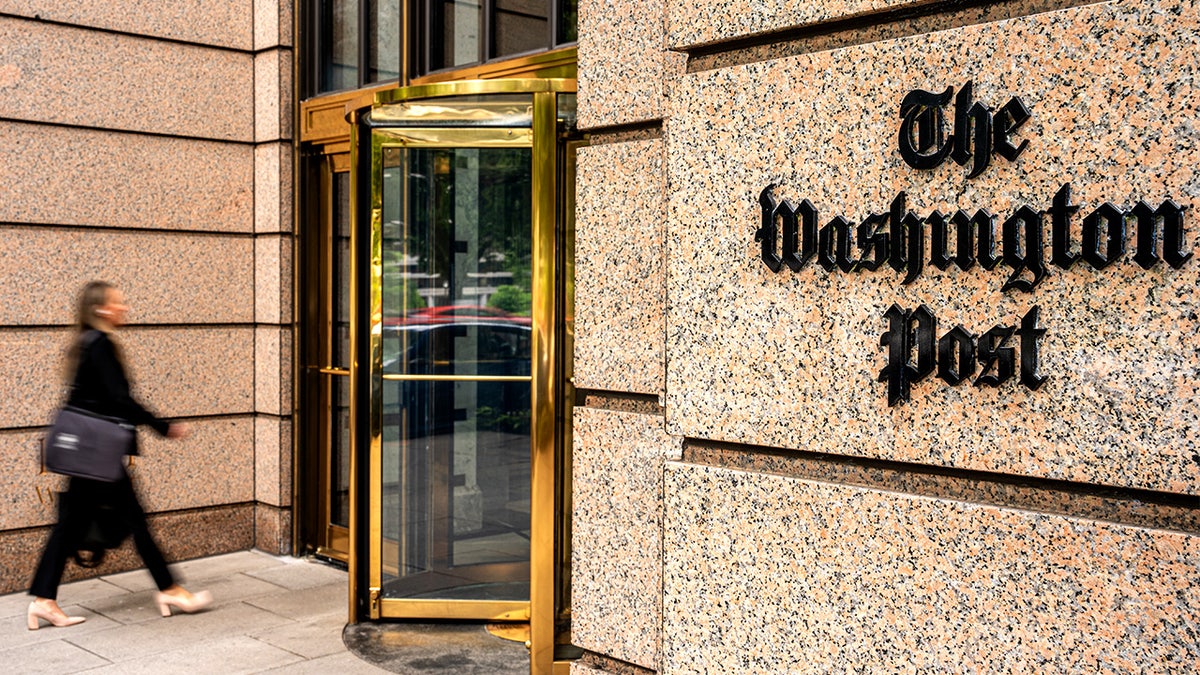
The Washington Post’s building in DC. The Post eliminated more than 300 jobs, laying off approximately 30% of its workforce. (Andrew Harnik/Getty Images)
Onetime Metro editor David Maraniss, a a mentor to so many at the paper, said: “He bought the Post thinking that it would give him some gravitas and grace that he couldn’t get from just billions of dollars, and then the world changed. Now I don’t think he gives a flying f***.”
In fairness, many newspapers have struggled with the collapse of their business model, as classifieds and advertising migrated online, and people could get breaking news from their phones or watches. Some converted to websites; the Pittsburgh Post-Gazette is closing in May.
More than a quarter of American newspapers have folded in the past two decades. Back in 1981, the Washington Star, where I worked, was shuttered as afternoon papers became obsolete.
But the Post is a classic case study of failure to adapt to the digital age. Katharine Graham was skeptical when she summoned me to explain this emerging universe.
EX-WASHINGTON POST CHIEF BLASTS ‘GUTLESS’ BEZOS AS PAPER ROCKED BY MAJOR LAYOFFS
In the Bezos era, the crashing waves of cutbacks meant asking readers to keep paying for a product that grew increasingly diminished over time, with its star players defecting to other major outlets.
At first, Bezos took a hands-off approach, seemingly in sync with the newsroom culture. During Trump’s first term, he coined the slogan “Democracy Dies in Darkness.” But there was a drastic shift in 2024.
When the editorial board drafted an endorsement of Kamala Harris, Bezos killed it, which as the owner he has every right to do. Had he decided on a non-endorsement earlier, few would have cared. But Bezos wielded the ax a week before the election, and the furor was deafening. As the Post itself reported, more than 250,000 people canceled their subscriptions.
Four months later, Bezos decreed that the editorial pages would focus every day on promoting “personal liberties” and “free markets,” banning any attempt to offer opposing views. Opinion Editor David Shipley, whose section had won two Pulitzers, resigned, and other editors and columnists cut ties with the Post.
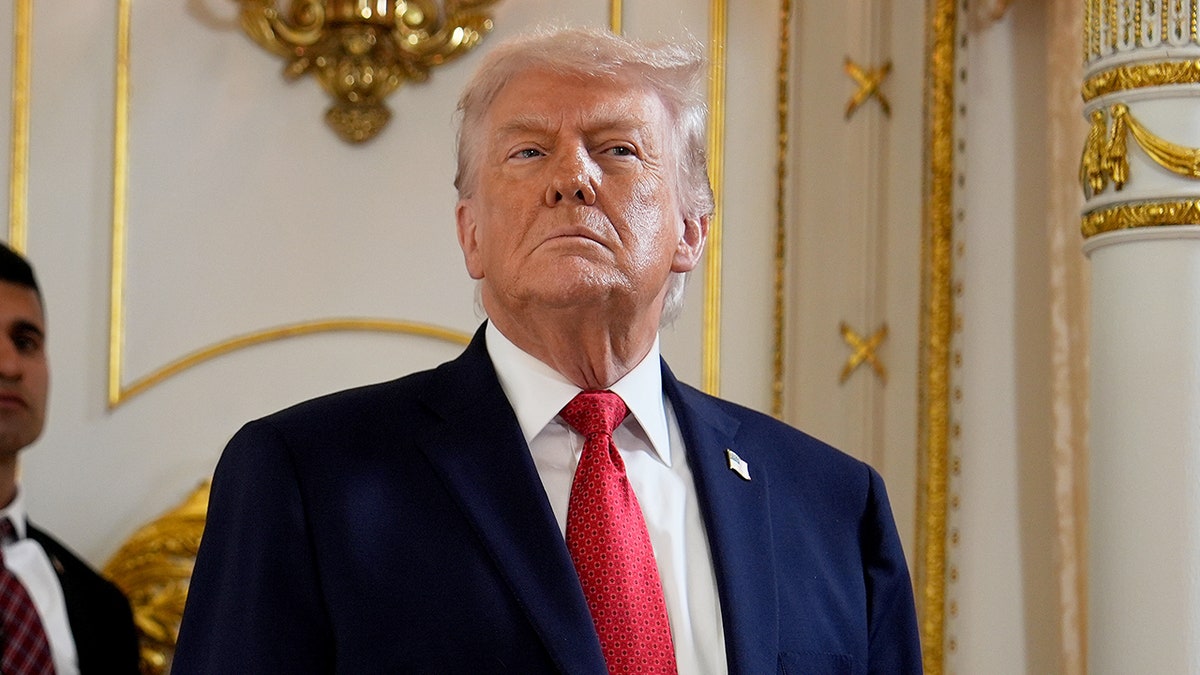
President Donald Trump arrives at a dedication ceremony for a portion of Southern Boulevard that the Town of Palm Beach Council recently voted to rename President Donald J. Trump Boulevard at his Mar-a-Lago Club in Palm Beach, Florida, Jan. 16, 2026. (Julia Demaree Nikhinson/AP Photo)
Meanwhile, the mogul socialized with the Trumps at Mar-a-Lago, and sat behind the president at his second inauguration.
Bezos himself, as everyone knows, is now quite the jet-setter. He found himself in the middle of a tabloid scandal when the National Enquirer published lewd texts between Bezos and his girlfriend, Lauren Sanchez, as news of his divorce was breaking. The Enquirer also published pictures of his genitals, which he slammed as an attempt at blackmail. Bezos proposed to Sanchez on his 417-foot yacht, and they were married last spring in Venice, an extravaganza attended by the likes of Oprah Winfrey, Leonardo DiCaprio, Gayle King, Tom Brady and Kim Kardashian. The price tag for the multi-day celebrations was somewhere between $20 million and $50 million.
For Bezos, this was basically spare change. Peter Baker, a Post alumnus who is now chief White House correspondent at the Times and an MS NOW analyst, reports that Bezos’ net worth is up $224 billion since buying the Washington paper.
So why does Bezos need the headache? He should unload this distressed asset to someone who would have a fresh shot at resuscitating the Washington Post from its near-death experience–though in all candor, it’s probably too late.
A day after abolishing the Post’s sports section, CEO Will Lewis – who blew off the staff call explaining the layoffs – was walking the red carpet at the NFL Honors in San Francisco, an event leading up to the Super Bowl. Those who had lost their jobs, and their colleagues, were furious.
CLICK HERE TO GET THE FOX NEWS APP
Even worse, he wouldn’t allow the Post to write about the sweeping layoffs. Seriously. His terse farewell note thanked only Bezos.
Back in the day, there would have been a half-dozen stories in the Post about the journalistic earthquake in its midst. But that was a long time ago.