
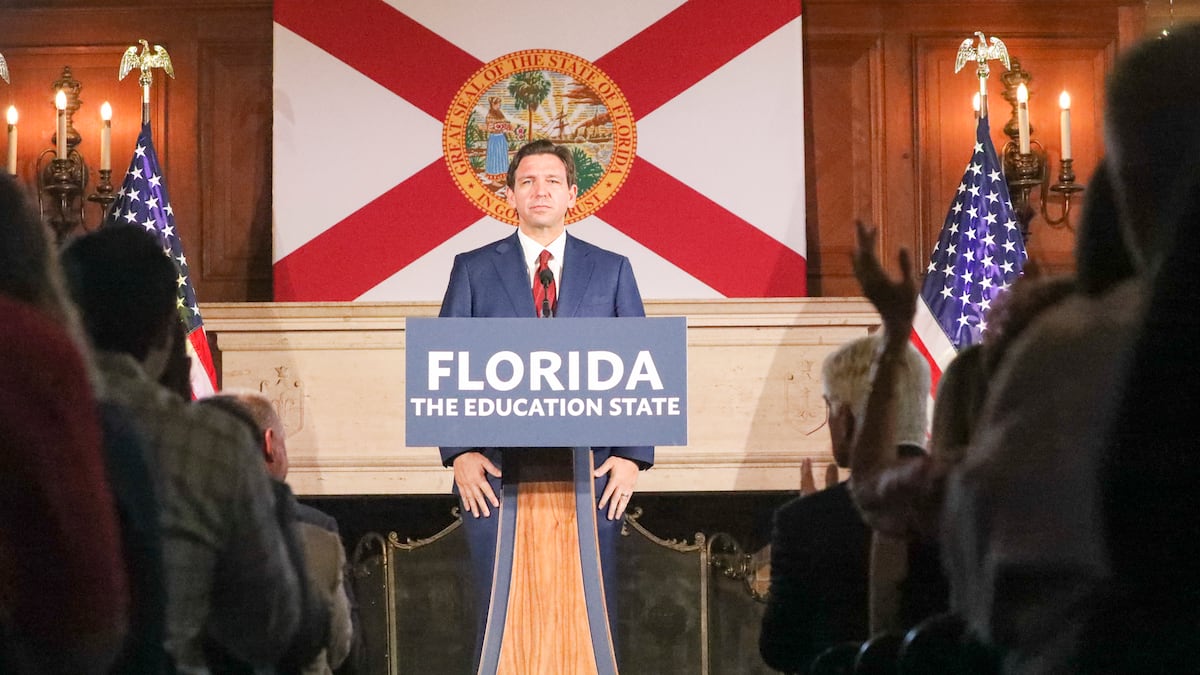
The state of Florida has been ranked No. 1 for higher education by U.S. News & World Report for eight consecutive years. But this year’s Best Colleges rankings, released early Tuesday, saw dips for some of the state’s top schools.
The University of Florida slipped from sixth to seventh among public universities, two years after back-to-back top 5 rankings. The state’s flagship school also fell two spots to No. 30 among all universities in the United States, public and private.

The University of South Florida and Florida State University held their statuses among public universities, ranking as No. 45 and No. 23 respectively. But overall, USF fell two spots to No. 91 and FSU fell one spot to No. 54.
Other schools made gains. Florida International University broke into the top 50, tying for No. 46 among public universities, and jumping 26 spots to No. 98 among all universities. The university also tied with the University of California, Riverside as the top performer in the country for social mobility, measured by graduation rates of low-income students receiving federal Pell Grants. USF ranked No. 22 nationally for this.
The University of Central Florida moved up five spots to No. 61 among public universities, and up three overall to No. 121.
The state university system released a statement saying the system continued to excel, particularly drawing attention to the gains made by FIU, Florida A&M and Florida Atlantic University.
“The impressive rankings achieved by our 12 universities this year reaffirm Florida’s status as the top state for higher education,” state university system chancellor Ray Rodrigues said in a statement. “The State University System of Florida remains committed to maintaining academic excellence and delivering a high-quality education. The recognition from U.S. News & World Report highlights the successful results of our efforts.”
Among Florida schools, UCF ranked as the most innovative, and USF as the best value.
“The University of South Florida’s sustained success as a top 50 public university underscores the strong return on investment that a degree from our institution provides to our students and the impact we are making on the Tampa Bay region, our state and beyond,” USF President Rhea Law said in a statement. “This recognition is a testament to the dedication and collective effort of our students, faculty, staff, alumni, donors, partners and all who support our university.”
Among national liberal arts colleges, New College of Florida fell 22 spots after falling 24 spots the year before. The school now sits at No. 122 this year.
/cloudfront-us-east-1.images.arcpublishing.com/tbt/3ZG7PKPGXZHMNE76F7AGCEZ5DA.jpg "Catch up on top stories before rush hour")
Catch up on top stories before rush hour
Become a Times subscriber to get our afternoon newsletter, The Rundown
We’ll break down Tampa Bay’s biggest environment, politics, business, education and culture news every weekday
You’re all signed up!
Want more of our free, weekly newsletters in your inbox? Let’s get started.
Florida Polytechnic University in Lakeland kept its spot as the top public regional college in the South for the third year in a row, and stayed No. 2 overall among regional colleges in the South. The private Flagler College ranked No. 3 overall in the same category, and the private Rollins College ranked as the No. 2 among regional universities in the South.
For the sixth year, Florida A&M University kept the No. 1 spot among public historically black colleges. It moved up 18 spots among all colleges and universities. FAU moved up 9 spots to No.103.
The publication’s 2025 Best College rankings follow years of speculation over the impact the state’s scrutiny on higher education would have on its national reputation.
A news release from U.S. News and World report said more schools saw no change in ranks compared to the previous year, when the methodology for rankings changed. This year’s methodology consisted of 17 factors including graduation rates; student borrower debt; faculty salaries and research productivity; and Pell Grant recipient graduation rates. It also includes peer assessment, or “how a school is regarded by top administrators at other institutions.”
This year the organization removed six-year graduation rates as a factor and increased the weight placed on Pell Grant recipient graduation rates. They also removed first-generation student graduation rate data for its historically black universities rankings and social mobility rankings.
Editor’s note: A previous version of this article incorrectly listed Florida State University’s rank. The article has been updated.
Divya Kumar covers higher education for the Tampa Bay Times, in partnership with Open Campus.