
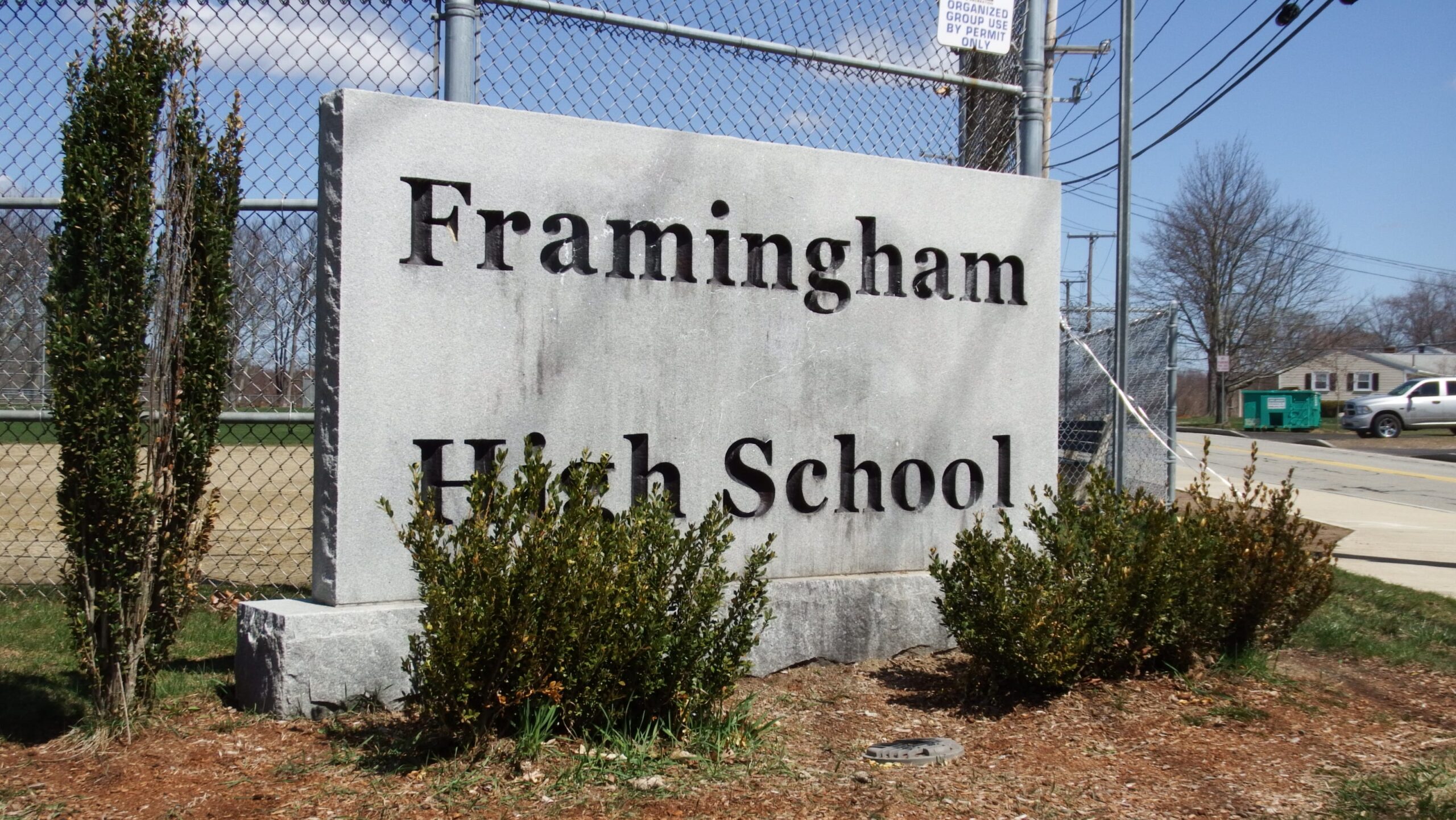
Three MetroWest communities were awarded federal grants to support homeless students in their school districts, the state announced earlier this week.
Framingham, Marlborough and Milford Public Schools were among 47 districts throughout the state to receive a piece of more than $1.7 million in federal McKinney-Vento Homeless Education grants. Framingham got $65,000, Marlborough received $50,000 and Milford was awarded $30,000.
According to a press release from the state, the money is going to additional support and resources for family engagement, staff training, English language services, tutoring, school supplies and other needs.
In Framingham, Superintendent of Schools Robert Tremblay said the funding will go toward creating a McKinney-Vento engagement specialist position to help homeless students in their education. He estimates the school district enrolls 600 homeless students.

‘Humanizes our people’:Framingham schools chief hosts podcast on Spotify, YouTube
“These funds are helpful to provide support for students that they need,” Tremblay told the Daily News.
Milford and Marlborough’s school superintendents did not immediately respond to requests for comment.
Framingham, Marlborough and Milford are all considered Title I districts, according to the state’s Department of Elementary and Secondary Education (DESE). State data also lists Framingham and Marlborough as having relatively high numbers of families living in shelters, hotels or motels. As of Sept. 9, there were 217 families in Framingham in that situation, along with 150 in Marlborough and 77 in Milford.
More than half of the students in each district come from low-income backgrounds, according to DESE data. In both Framingham and Milford, 54% of students come from low-income backgrounds, while in Marlborough the figure is roughly 58%.
New grants given to 47 school districts to support homeless students
The McKinney-Vento Homeless Education grants are supporting more than 20,000 students who experience homelessness at some point during the school year.
In particular, grants go toward supporting homeless students in their education, such as:
- support services and family engagement to address the ongoing needs of homeless students and families and to engage with families to remove barriers to student attendance;
- regional homeless education liaisons to support a network of experienced liaisons who provide technical assistance and training in collaboration with the state coordinator for homeless education;
- and homeless migrant student support to collaborate with the Massachusetts Migrant Education Program, which serves children of migratory agricultural workers.
State officials say the grants are to be used to support school districts as they continue to enroll and serve an increased population of students experiencing homelessness, including migrants who have come into the state seeking asylum.
In August 2023, Gov. Maura Healey declared a state of emergency and asked for federal assistance due to a rising number of migrant families coming to Massachusetts and requiring housing from the state’s already-strained shelter system. Massachusetts’ right-to-shelter law — the only such law in the nation — guarantees emergency housing assistance for people with children and pregnant women who are homeless or at risk of homelessness.
‘We want a better life’:Haitian asylum seekers share their experiences about coming to Framingham
In a statement, Healey said state officials are “deeply grateful” to school districts “that have been going above and beyond to support students experiencing homelessness and their families, including those who have long lived in Massachusetts and those who have newly arrived in Massachusetts.”
The governor added that state officials “also understand the strain facing school districts and the need for more resources.”
“That’s why we’re proud to be delivering these federal funds to help schools support these students,” she said. “Our administration will continue to advocate for additional federal support to address this federal problem.”
The grants were competitive, and the amount of money each school district received was based on the priorities the applicant applied for and the number of enrolled homeless students.