
Most people would have been reluctant to travel to Egypt in 2011. It was a time of widespread systemic change across most of North Africa and the Middle East, known as the Arab Spring.
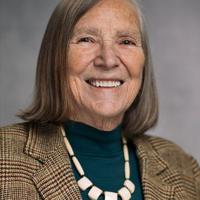
Former Fairbanks science teacher Deborah Pomeroy wasn’t deterred by the unrest. She had her own role to play in the revolution.
Pomeroy moved to Fairbanks in 1970, where she did a brief stint at the University of Alaska Fairbanks (then simply called the University of Alaska) Institute of Arctic Biology. Shortly after, she received her teaching certificate from UAF and started teaching science at Lathrop High School.
Ruthanne Rust, a teacher who started in Fairbanks the year before Pomeroy, recalled finding out she got the job via an old-fashioned telegram.
Pomeroy spent 19 years with the Fairbanks North Star Borough School District. In addition to being a teacher, she also served as chief of the Chena-Goldstream Fire Department and president of the Fairbanks Education Association.
She said school board meetings back then could be as heated as they sometimes are today. A News-Miner headline from the mid-1970s reads, “Pomeroy blasts Smith,” after she and a former superintendent got into it during one such meeting.
“I still have that headline,” Pomeroy said.
Her most impactful work came later in her career. After receiving her education Ph.D. from Harvard University and 14 years of teaching science education at Arcadia University, the U.S. Agency for International Development came calling.
Pomeroy and her Arcadia colleague, F. Joseph Merlino, were working on a book that explores education reform in the United States
“Egypt was our chance to try out our theories that we felt were really well-grounded,” Pomeroy said. “Education in Egypt has changed because of this.”
Thus began an experiment in “purpose.”
“This was in the middle of the Egyptian Revolution,” Pomeroy said. “Everybody there, they dared to dream.”
In 2011, protests largely led by the nation’s younger population aimed to overthrow long-term president Hosni Mubarak’s authoritarian regime. Years of high unemployment rates, governmental corruption and lack of economic development had the country’s residents looking for a change.
The Egyptians needed to equip a generation of young people to take their nation into the future.
“We built five model STEM [Science, Technology, Engineering, Math] schools,” Pomeroy said. “The graduates of these schools blew the minister of education away and actually the president of Egypt, El-Sisi, away.”
Pomeroy and her colleagues asked the Egyptian Ministry of Education what they wanted for their country. The ministers presented a list of “grand challenges.”
“They had a statement, and the biggest statement of all was that they wanted to prepare students to solve the grand challenges of Egypt,” Pomeroy said. “Overpopulation, water, use of arid areas, climate change, infrastructure — these are the grand challenges. Now how can we create a curriculum that is focused around these grand challenges?”
Pomeroy and colleagues designed classroom curriculums geared toward teaching students how to go about solving these problems for the country.
“If you went into Lathrop or West Valley now and asked parents, students and teachers what the purpose of education is, chances are you will get different answers,” Pomeroy said. “There’s a lot of good stuff going on in American education, but it’s done without this unifying purpose.”
Pomeroy said each lesson in the curriculums she helped design in Egypt relates to how to solve a particular issue facing the country. For example, when students are taught the quadratic equation, they learn how to apply it to rates of growth in civics or chemistry.
“If I’m teaching chemistry in the U.S. you are learning about it so you can be prepared for your next class,” she said. “The next class you need to get into college. The kid has no real ownership of why they are learning something.”
Pomeroy’s curricula has equipped a generation of Egyptians with the knowledge of how to apply their learning to solving the real world problems of their nation.
A few years ago, she ran into a student at the Cairo airport. They were both on their way to the U.S. at 5 a.m.
“Your Dr. Deborah, right?” the student asked. (In Muslim-majority countries, it is common to call teachers by their first names)
“I just want to thank you for this gift of the schools,” the student said.
“I smiled for the next 12 hours,” Pomeroy told the News-Miner.
For ten years, Pomeroy traveled to Egypt 25 times. Today there are more than 100 schools there using curricula she helped design.
In March, Pomeroy and Merlino released their book, “New Era — New urgency: The Case for Repurposing Education” It is a guide map for, as she puts it, “Re-forming” the American education system based on what she learned from the students of Egypt.
Deborah Pomeroy will speak on her book, “New Era – New Urgency: The Case for Repurposing Education,” as part of the Osher Lifelong Learning Institute’s programing. The talk is 10:30 a.m. to 11:45 a.m. today at the University Park Building, Room 151, 1000 University Ave. The OLLI fee is $20. For more information call 907-474-6607 or email uaf-olli@alaska.edu.