

The share of companies entering insolvency has risen sharply over the past couple of years to be at the
top of the range observed in the 2010s, but on a cumulative basis remain slightly below their
pre-pandemic trend. The rise has been due to challenging economic conditions and a catch-up effect from
exceptionally low insolvencies during the pandemic. Financial stability risks, though, remain contained
because most insolvent firms are small with little debt, many have a chance of recovery, and indirect
effects on financial stability via job losses have been limited.
This Focus Topic examines the characteristics of firms that have recently entered insolvency, the factors
that have caused them to become insolvent, and the implications for financial stability.
Insolvency is the most severe form of financial stress for a business and can occur for a variety of
reasons.
Insolvency affects only a very small share of businesses in a typical year. A business
is considered insolvent when it is no longer able to pay its debts when they fall due. In such a case, a
third party is appointed to assess the financial position of the firm, and often takes control to manage
the firms assets in the best interest of creditors. Insolvency can take various forms, including
liquidation, voluntary administration, receivership and small business restructuring. Over the
15 years prior to the pandemic, only an average of 0.1 per cent of firms entered
insolvency each quarter (Graph 4.3.1). By contrast, roughly 10 times as many firms exited
by ceasing trade without actually entering insolvency.
Graph 4.3.1
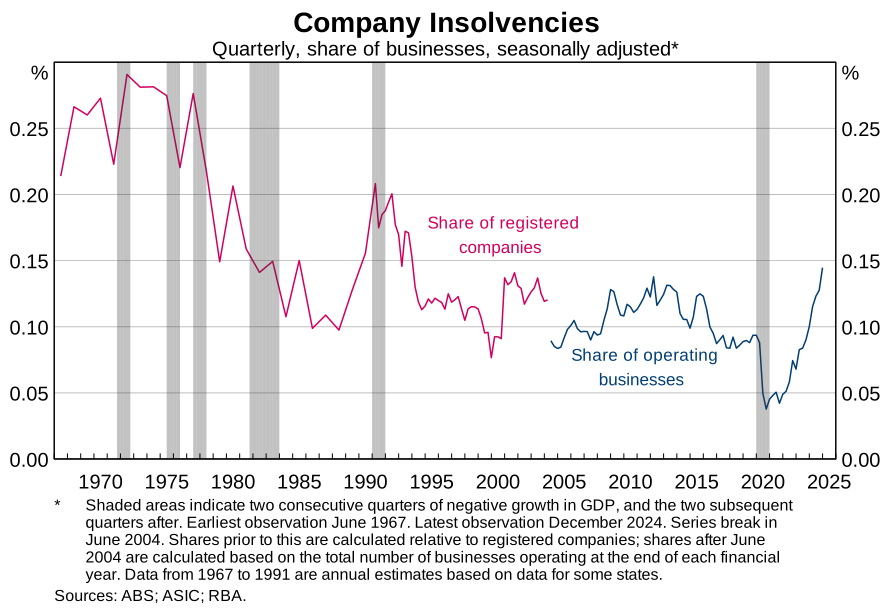
Insolvency can arise from economic conditions and/or business-specific reasons. Economic
downturns, such as the 1990s recession and the global financial crisis, often drive the insolvency rate
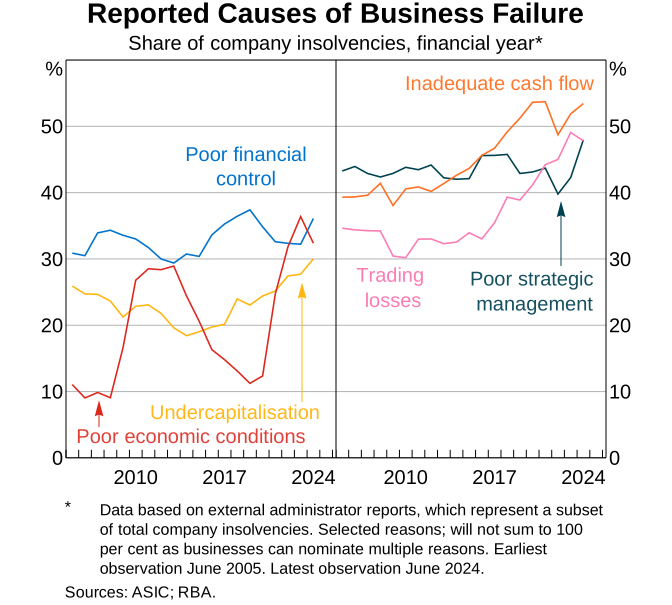
higher (Graph 4.3.1). Business-specific factors, such as poor strategic management or financial
control, also play an important role (Graph 4.3.2). Firms citing economic conditions as a cause of
insolvency also tend to cite other business-specific issues; this suggests that weak economic conditions
exacerbate underlying issues with a firms business model or management.
Graph 4.3.2
Changes in policy and insolvency arrangements can also affect trends in insolvencies. For
example, in the early 2000s the lowering of corporate insolvency costs led to an increase in the
insolvency rate at the same time. More recently, a number of support measures introduced during the
pandemic also had an effect on insolvencies (discussed below). The introduction of small business
restructuring – a new process of restructuring debts – may also have slightly affected
aggregate insolvencies since 2021.
While the pathway into insolvency varies, it typically follows an extended period of cashflow
difficulty, leading to an inability to repay debts. Cash flow difficulties can stem from a
fall in revenue, an increase in costs (including interest expenses), and/or pressure on margins. These
shifts can originate from industry or business-specific developments (such as losing a key customer), or
from the broader economic environment (such as weak aggregate demand or cost pressures). Firms may try to
weather this period by drawing on their existing cash or equity buffers, and/or by accruing more debt
with banks, non-bank lenders, other businesses via trade credit, or the Australian Taxation Office (ATO).
Pandemic support measures reduced the risk of widespread financial stress and economic damage, reducing
insolvencies during this period.
Income support policies supported business cash flows and employment. By
increasing businesses cash flows, the support measures reduced the share of businesses facing cash
shortfalls and prevented many firms from failing during the pandemic.
Changes to the insolvency framework allowed more businesses to continue trading than would
otherwise have been the case. For example, the thresholds for owed amounts before creditors
were able to issue a statutory demand for payment were temporarily increased. One
ongoing reform involved the introduction of small business restructuring plans. This reform aimed to
improve the survival rate of small firms in financial stress, and to simplify and reduce the costs
associated with insolvency procedures.
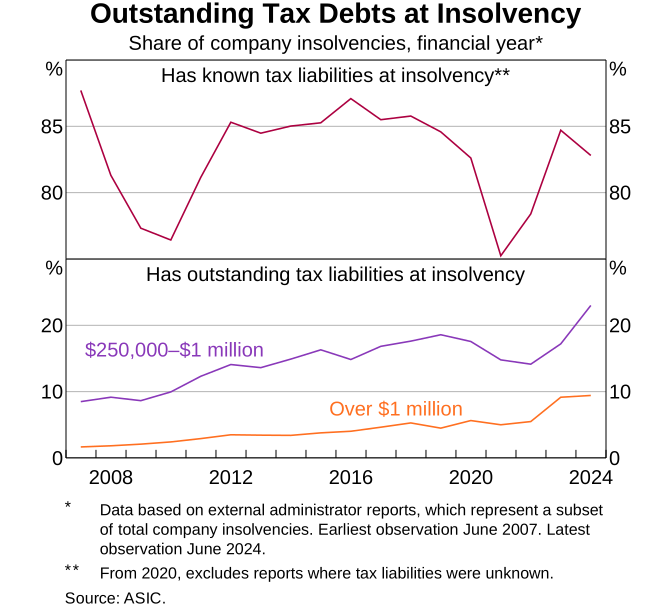
Flexibility in tax payments and lodgements also played a key role in keeping insolvencies low
during the pandemic. The ATO is a creditor for many insolvent firms and introduced various
relief measures during the pandemic (Graph 4.3.3, top panel). These included payment and
lodgement deferrals and interest-free payment plans that helped some businesses in financial stress to
continue trading. These arrangements resulted in some firms accruing larger debts with the ATO
(Graph 4.3.3, bottom panel). Since 2022, the share of insolvent firms entering
external administration with tax liabilities exceeding $250,000 has risen by more than
10 percentage points. Compared with pre-pandemic levels, total collectable debt from insolvent small
businesses has more than doubled. This reflects not only the elevated level of insolvencies and the
larger debt owed to the ATO, but also the resumption of ATO enforcement activities.
Graph 4.3.3
Insolvencies have increased as pandemic support was removed and economic conditions became challenging.
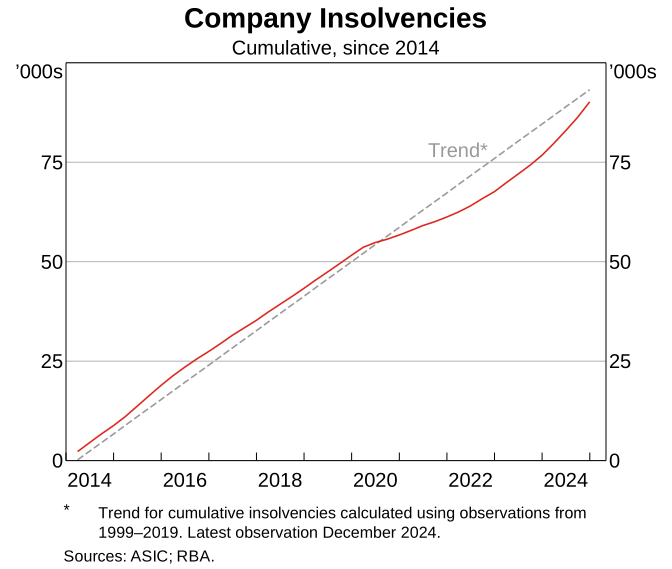
Pandemic policies delayed the failure of some firms. On a cumulative basis, insolvencies
fell below their pre-pandemic trend for an extended period and, despite increasing recently, have
remained slightly below that trend (Graph 4.3.4). Direct cash transfers and precautionary saving
helped most businesses accumulate substantial cash buffers through the pandemic period. While
the pandemic support measures helped firms stay afloat longer, those with underlying issues – such
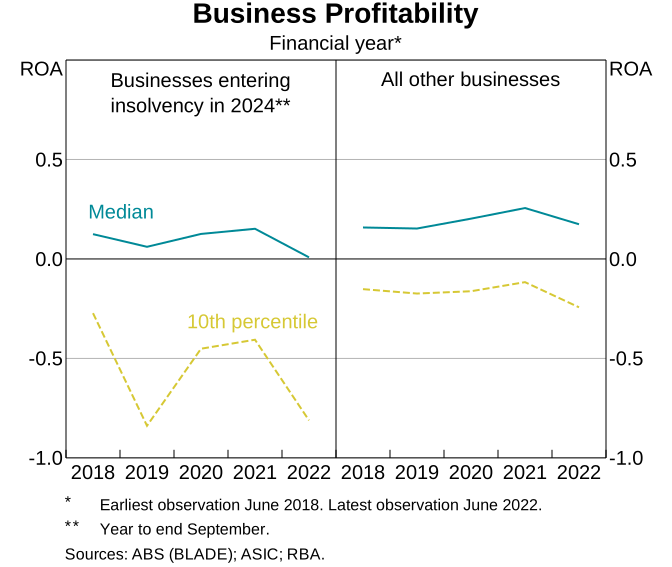
as poor management or weak financial control – may still ultimately fail. Further, while many
firms, particularly those with the lowest levels of profitability, saw temporary boosts to their
profitability during the pandemic, some have struggled again in recent years, leading to insolvency
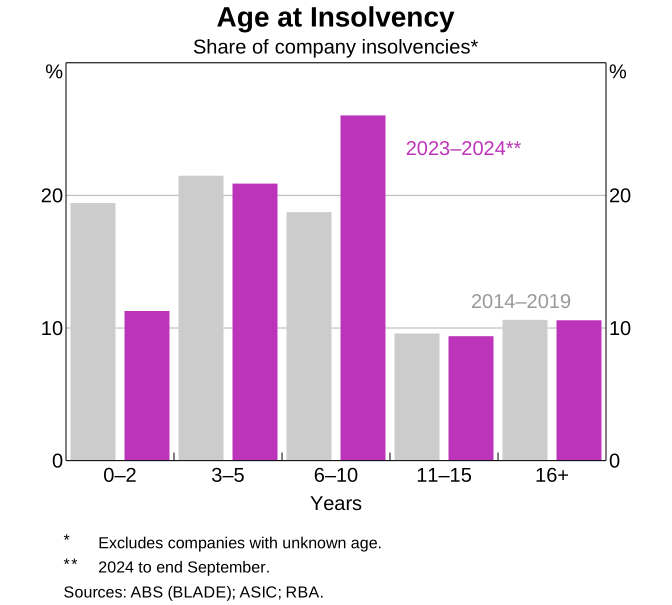
regardless (Graph 4.3.5). This is evident in the age distribution of firms
entering insolvency, with more older businesses failing in 2023 and 2024 than usual
(Graph 4.3.6).
Graph 4.3.4
Graph 4.3.5
Graph 4.3.6
In addition to the removal of pandemic support, rising costs, weak growth in demand and higher
interest rates have also contributed to the increase in insolvencies. Insolvencies remained
at record lows during 2022, as many businesses also benefited from a strong recovery in demand following
the pandemic. However, a range of firms have since faced significant cash flow pressures given the
economic environment and have had to cut costs. These pressures are likely to have been particularly
acute for those also experiencing firm-specific issues.
Insolvencies have been highest in construction and hospitality, reflecting the interaction of
industry-specific factors and economic conditions. Construction insolvencies increased
sharply in 2023 due to supply-side challenges, including high input costs, delays arising from labour and
materials shortages, and the prevalence of fixed-price contracts. Insolvencies have also risen
sharply in industries exposed to discretionary spending, notably hospitality. Poor economic conditions
were the most cited reason for failure among hospitality operators who entered insolvency in 2024. These
firms are especially vulnerable to changes in demand, as they typically operate with slimmer profit
margins and limited cash buffers.
Risks to the financial system remain contained as most insolvent firms are small and carry little debt.
Higher insolvencies could pose risks to the financial system through several channels.
The most direct risk is loan losses for lenders such as banks and non-banks. Insolvencies can also impact
other types of creditors, such as suppliers reliant on trade credit. Indirect risks arise when firm
failures are widespread and affected workers cannot secure employment elsewhere, which may result in some
defaulting on their mortgages or other debt, and lead to a further worsening of economic conditions.
Additionally, widespread business closures can trigger asset fire sales, potentially depressing asset
prices.
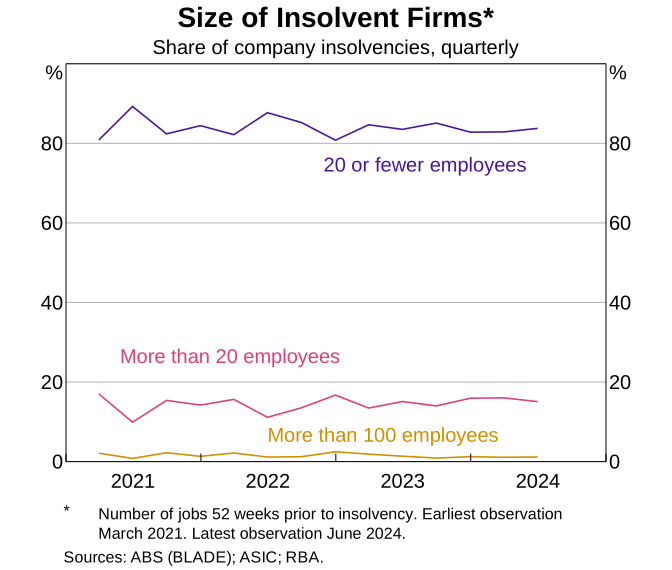
However, these risks currently remain contained. More than three-quarters of recent
insolvencies have been small businesses, defined as less than 20 employees (Graph 4.3.7).
Additionally, an increasing share of insolvencies are now small business restructures – currently
around 20 per cent. These businesses have small outstanding liabilities and a high recovery
rate, with more than 90 per cent re-registering and resuming trade within three months of the
insolvency appointment.
Graph 4.3.7
Banks have limited exposure to businesses that have entered insolvency in the recent
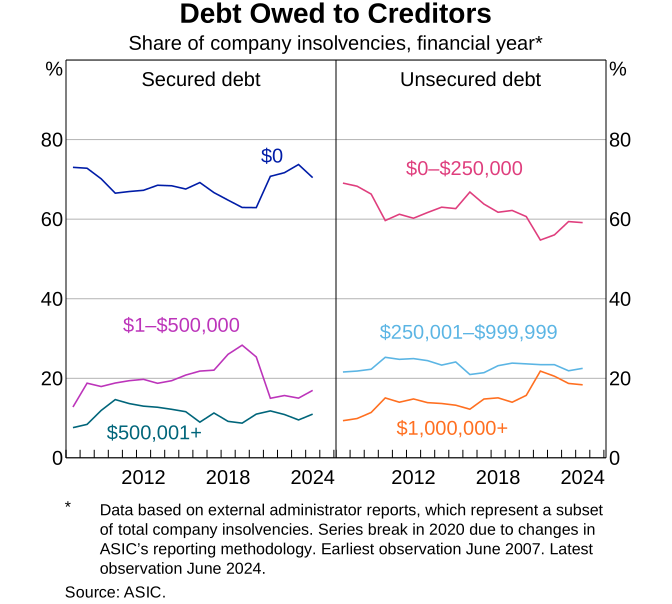
period. Banks non-performing loan rates remain low and external administrator reports
show that most companies entering insolvency have no outstanding secured debt (the type most likely to be
owed to banks) (Graph 4.3.8, left panel). Moreover, liaison indicates that banks risk
management practices further limit their exposure to these companies.
Most companies that enter insolvency have unsecured debt, typically owed to suppliers,
contractors, non-bank lenders and related parties of the business (Graph 4.3.8, right
panel). Many of these unsecured creditors have incurred losses, with suppliers and contractors rarely
recovering funds from external administrations, which accounts for a large share of total company
insolvencies. Liaison indicates that non-banks have also incurred
some losses from insolvencies, though these are small. Additionally, while the share of trade credit that
is overdue has increased over the past couple of years, it remains around its historical average, even in
industries experiencing elevated insolvency rates.
Graph 4.3.8
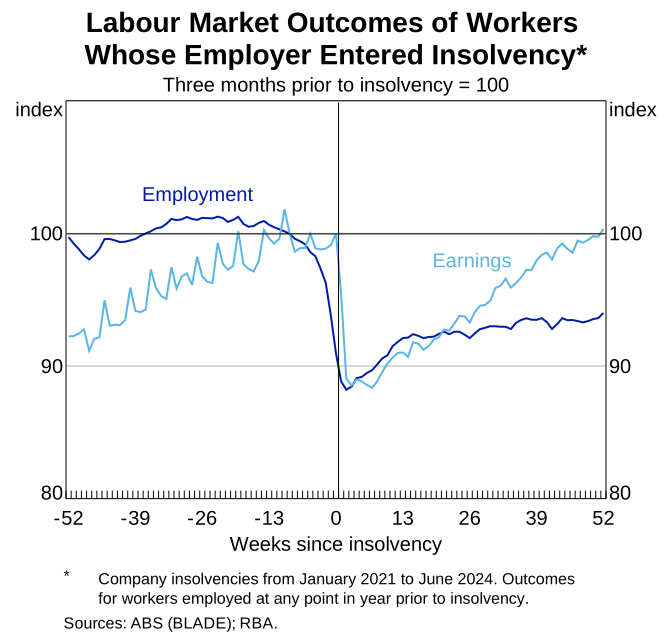
Job losses at insolvent companies have been limited, and most affected employees have quickly
secured new employment. Most businesses entering insolvency have less than 20 employees
(Graph 4.3.7). And more than 90 per cent of individuals who were working for an insolvent
firm in the year leading up to the insolvency have been re-employed by another business within a few
months or been retained. These individuals have been able to recover their pre-insolvency earnings within
a year (Graph 4.3.9). This includes workers in those industries with higher
rates of insolvency. However, there is a small share who do not find a new job within a year. Businesses
that enter small business restructuring retain most of their workers, consistent with the vast majority
continuing to trade.
Graph 4.3.9
The risk of widespread asset fire sales has been limited as most businesses entering insolvency do
not hold secured debt. Spillovers are also likely limited to businesses that held
business-related assets. While conditions in commercial property markets – particularly offices
– have been challenging in recent years, there is little evidence of financial stress among owners
of commercial real estate. The risk of fire sales impairing market functioning is lower for other assets
that are used as collateral for business loans – for example, cars and trucks – as these
markets are typically deeper and more homogenous.
Risks to the financial system are expected to remain contained even if insolvencies remain elevated.
The future path for insolvencies is highly dependent on how economic conditions evolve, though
some factors will put upward pressure on the insolvency rate in the months ahead.
Insolvencies are yet to return to the pre-pandemic trend in several industries, suggesting there may be
more catch-up to come given the exceptionally low insolvencies during the pandemic. While cash flow
pressures are expected to ease (see Chapter 2: Resilience of Australian Households and
Businesses), this will not necessarily translate into a lower level of insolvencies in the near term due to the lag between
entering financial stress and insolvency.
Nevertheless, risks to the financial system are expected to remain contained. Smaller
firms continue to be more at risk of insolvency as they are more vulnerable to the current challenging
conditions than larger firms. Should more medium- or large-sized businesses enter
insolvency, lenders exposures would likely increase.